Design of the Flag of Rhode Island
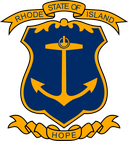
The flag of Rhode Island features a white field with a golden anchor placed at the center. Beneath the anchor is a blue ribbon bearing the word “HOPE” in gold letters.
Surrounding the anchor are thirteen gold stars, arranged in a circular pattern. The design is clean, balanced, and highly symbolic.
Unlike most U.S. state flags, Rhode Island’s flag does not use a blue background, making it visually distinctive and easy to recognize.
Meaning of the Colors and Symbols
Each element of the Rhode Island flag carries historical meaning tied to the state’s identity.
The white background symbolizes purity, peace, and freedom. It reflects Rhode Island’s founding principles of religious tolerance and liberty.
The gold anchor represents hope and stability. It is inspired by the biblical phrase “Hope we have as an anchor of the soul” and reflects Rhode Island’s strong maritime tradition.
The word “HOPE” serves as the official state motto and emphasizes optimism, perseverance, and trust in the future.
The thirteen stars represent Rhode Island’s place as one of the original thirteen colonies of the United States, highlighting its role in the nation’s founding.
Historical Background and Adoption
Rhode Island was founded in the 17th century by Roger Williams, who promoted religious freedom and separation of church and state. These values strongly influenced the symbols later chosen for the state flag.
Rhode Island declared independence from British rule in 1776, becoming one of the first colonies to do so. The anchor symbol was already widely used in colonial seals and documents.
The current design of the Rhode Island flag was officially standardized on November 1, 1897, though variations had been used earlier. The standardization ensured consistent use of the anchor, motto, and stars.
More historical context can be found on the history of Rhode Island page.
Cultural and State Significance
The Rhode Island flag holds strong cultural importance and is widely displayed during state holidays, civic events, and official ceremonies.
It represents freedom of belief, maritime heritage, and resilience. The anchor symbol connects Rhode Island to its coastal geography and long-standing role in trade and navigation.
Among U.S. state flags, Rhode Island’s design is often compared with the Flag of Delaware, though Rhode Island’s use of a white field and anchor makes it unique.
The flag’s simplicity has helped it remain meaningful across generations.
Official Use and Flag Etiquette
The flag of Rhode Island is flown at the State House in Providence, government buildings, schools, and public institutions. It is commonly displayed alongside the Flag of the United States.
Respectful handling of the flag is encouraged. It should be kept clean and displayed properly, especially during official ceremonies and commemorations.
The flag is also used in educational settings to teach students about state history and values.
The Flag in Modern Rhode Island
In modern Rhode Island, the flag continues to symbolize hope, liberty, and tradition. It appears in state branding, tourism materials, and cultural promotions.
The motto “HOPE” remains especially relevant in modern times, reinforcing optimism and civic pride.
Despite discussions in some states about redesigning flags, Rhode Island’s flag remains widely respected for its clarity and symbolism.
Design Strength and Recognition
The Rhode Island flag is praised for its clear symbolism and minimalist design. With only a few elements, it communicates powerful ideas effectively.
The use of maritime imagery sets it apart from seal-based state flags and strengthens its historical connection to the sea.
Its clean layout ensures easy recognition and timeless appeal.
Questions About the Flag of Rhode Island
What does the anchor on the Rhode Island flag represent?
It represents hope and maritime heritage.
Why does the flag say “HOPE”?
“Hope” is the official state motto of Rhode Island.
How many stars are on the flag?
There are thirteen stars representing the original colonies.
When was the Rhode Island flag adopted?
It was standardized on November 1, 1897.
Is the Rhode Island flag the same on both sides?
Yes, the design appears on both sides of the flag.