Design of the Flag of Tanzania
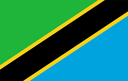
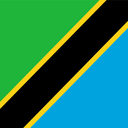
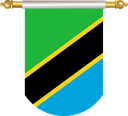
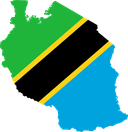
The Flag of Tanzania features a diagonal black stripe running from the lower hoist corner to the upper fly corner.
- The black stripe is bordered by thin yellow lines
- The upper triangle is green
- The lower triangle is blue
This diagonal layout gives the flag a sense of movement and balance while clearly separating symbolic elements.
Meaning of Colors and Symbols
Each color of the Flag of Tanzania carries deep symbolic meaning connected to history and geography.
The green color represents the fertile land, agriculture, and natural vegetation of Tanzania. It symbolizes growth and the country’s rich forests and farmlands.
The black stripe represents the people of Tanzania. It symbolizes unity, strength, and African identity.
The blue color represents the Indian Ocean, lakes, and rivers. It symbolizes water resources and maritime importance.
The yellow borders represent mineral wealth, including gold and other natural resources found in Tanzania.
Together, these colors express land, people, water, and wealth in balanced harmony.
Historical Background of the Tanzania Flag
The Flag of Tanzania was officially adopted on June 30, 1964, following the union of Tanganyika and Zanzibar to form the United Republic of Tanzania.
Before the union, Tanganyika and Zanzibar each had their own flags. The new design combines elements from both, symbolizing unity and cooperation.
The diagonal stripe reflects Tanganyika’s black and yellow colors, while the green and blue represent Zanzibar’s identity and geography.
Readers interested in this political union can explore more context on the History of Tanzania page.
Cultural and National Significance
The Flag of Tanzania holds strong national and cultural importance. It represents unity between mainland and island regions and respect for diversity.
The flag is prominently displayed during Union Day, Independence Day, and national ceremonies. For Tanzanians, it symbolizes peace, cooperation, and shared national values.
The diagonal design reinforces the idea of movement forward and progress.
Relationship to Other African Flags
The Flag of Tanzania differs from many African national flags that use horizontal Pan-African stripes.
Its diagonal design and combination of colors make it visually unique. While it shares symbolic meanings like land and people with other African flags, Tanzania’s layout emphasizes unity through fusion rather than repetition.
Comparing African flags highlights Tanzania’s creative approach to national symbolism.
Modern Use of the Flag of Tanzania
Today, the Flag of Tanzania is flown on government buildings, schools, public institutions, and national landmarks across the country. It is also displayed at embassies, international organizations, and sporting events representing Tanzania abroad.
The flag plays an important role in civic education, helping citizens understand national unity, independence, and shared responsibility. Its continued use reinforces Tanzania’s identity as a united and peaceful African nation.
Interesting Facts About the Flag of Tanzania
- It was adopted in 1964.
- It symbolizes the union of two regions.
- The diagonal stripe is uncommon in African flags.
- Yellow represents mineral wealth.
- Black represents the people.
Questions About the Flag of Tanzania
What does the black stripe on the Tanzania flag represent?
It represents the people of Tanzania.
Why does the Tanzania flag have a diagonal design?
It symbolizes the union of Tanganyika and Zanzibar.
When was the Flag of Tanzania adopted?
It was adopted on June 30, 1964.
What do the colors of the Tanzania flag mean?
Green represents land, blue represents water, black represents people, and yellow represents minerals.
Where is the Tanzania flag commonly displayed?
It is flown on public buildings and during national events.