Design of the Flag of Jersey
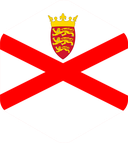
The Flag of Jersey features a white field with a red diagonal cross, known as a saltire, stretching from corner to corner.
At the center of the flag is a red shield bearing three gold lions. Above the shield is a gold crown, adding a clear symbol of authority and heritage.
The diagonal cross gives the flag a dynamic appearance, while the central emblem provides strong historical context and visual balance.
Meaning of Colors and Symbols
Each element of the Flag of Jersey carries historical and cultural meaning.
The white background represents peace, clarity, and honesty. It allows the red cross and central emblem to stand out clearly.
The red saltire represents Christianity and is linked to St. Patrick. It also reflects Jersey’s long Christian heritage and medieval roots.
The three gold lions symbolize Jersey’s historic ties to the Duchy of Normandy and the English Crown. Lions are traditional symbols of strength, courage, and authority.
The gold crown represents loyalty to the British monarch while highlighting Jersey’s status as a Crown Dependency rather than a part of the United Kingdom.
Together, these elements express faith, heritage, and constitutional identity.
Historical Background of the Jersey Flag
For many centuries, Jersey used a plain red saltire on a white background. However, this design often caused confusion with other flags, particularly maritime signals.
To address this, the modern Flag of Jersey was officially adopted in 1981, adding the crowned shield with three lions to distinguish it clearly.
Jersey’s history is closely linked to Normandy and medieval England. Although geographically close to France, Jersey has remained under the British Crown since the Norman Conquest. Readers interested in this background can explore more details on the History of Jersey page.
Cultural and Regional Significance
The Flag of Jersey holds strong cultural importance for island residents. It represents autonomy, tradition, and pride in a distinct identity.
The flag is prominently displayed during Liberation Day celebrations, local festivals, and official ceremonies. For Jersey residents, it symbolizes freedom from occupation, continuity of governance, and respect for history.
Relationship to the United Kingdom Flag
Jersey is not part of the United Kingdom, and therefore it has its own flag. The Union Jack may be flown on certain official occasions, but the Flag of Jersey represents the island’s own government and authority.
This dual-flag relationship reflects Jersey’s constitutional status as a self-governing Crown Dependency with strong historical ties to the British Crown.
Relationship to Other Channel Islands Flags
The Flag of Jersey shares similarities with the flags of Guernsey and Herm, particularly in Christian symbolism and medieval design.
However, Jersey’s use of a diagonal cross and crowned shield makes it visually unique. Comparing Channel Islands flags highlights how shared heritage is expressed through distinct visual identities.
Modern Use of the Flag of Jersey
Today, the Flag of Jersey is flown on government buildings, schools, harbors, and public spaces throughout the island. It is also displayed at international sporting and cultural events where Jersey participates independently.
The flag plays an important role in education and civic identity, helping residents understand history, governance, and cultural continuity. Its continued use reinforces Jersey’s unique status and heritage.
Interesting Facts About the Flag of Jersey
- The modern design was adopted in 1981.
- The red cross is a saltire, not a straight cross.
- The lions reflect Norman heritage.
- Jersey is a Crown Dependency, not part of the UK.
- The flag symbolizes autonomy and loyalty.
Frequently Asked Questions
What does the red diagonal cross on the Jersey flag represent?
It represents Christian heritage and historical tradition.
When was the Flag of Jersey officially adopted?
It was adopted in 1981.
Is Jersey part of the United Kingdom?
No, Jersey is a Crown Dependency.
Why are there lions on the Jersey flag?
They symbolize historical ties to Normandy and the Crown.
Where is the Jersey flag commonly displayed?
It is flown on public buildings and during island celebrations.