Design of the Flag of Tristan da Cunha
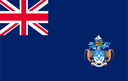
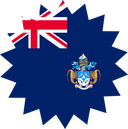
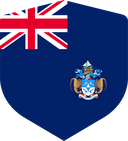
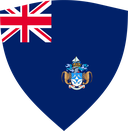
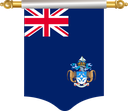
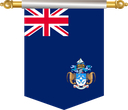
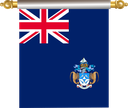
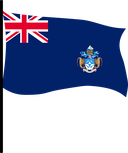
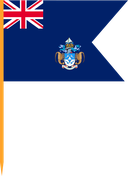
The Flag of Tristan da Cunha follows the standard British Overseas Territory Blue Ensign format.
- The background is dark blue
- In the upper hoist corner is the Union Jack
- On the fly side is the coat of arms of Tristan da Cunha
The coat of arms is placed prominently to distinguish the territory from other British overseas flags.
Meaning of Colors and Symbols
Each element of the Flag of Tristan da Cunha carries specific symbolic meaning.
The blue background represents the Atlantic Ocean that surrounds the islands. It reflects maritime life, isolation, and dependence on the sea.
The Union Jack represents the constitutional relationship with the United Kingdom and British sovereignty over the territory.
The coat of arms includes important local symbols:
- Two Tristan rock lobsters, representing the fishing industry, which is central to the island’s economy
- A shield showing Tristan da Cunha’s rugged landscape
- A naval crown, symbolizing maritime heritage and defense
- A banner with the motto “Our faith is our strength”, reflecting community resilience and unity
Together, these symbols express identity, survival, and connection to both land and sea.
Historical Background of the Tristan da Cunha Flag
Tristan da Cunha was formally annexed by Britain in 1816 to prevent its use as a base following Napoleon’s exile.
As a British Overseas Territory, Tristan da Cunha did not develop a separate national flag but instead adopted the Blue Ensign format used by many British territories.
The current flag design incorporating the local coat of arms was approved in 2002, allowing the territory to visually represent its unique identity while maintaining British ties.
Readers interested in settlement and colonial administration can explore more context on the History of Tristan da Cunha page.
Cultural and Community Significance
The Flag of Tristan da Cunha holds strong meaning for its small population, which numbers only a few hundred residents.
The flag represents survival in extreme isolation, cooperation within a tight-knit community, and pride in local heritage. It is displayed during official events, community gatherings, and visits by representatives of the United Kingdom.
The motto on the coat of arms reflects the values that have allowed the community to endure harsh conditions and geographic isolation.
Relationship to Other British Overseas Territory Flags
The Flag of Tristan da Cunha is part of a wider family of British Overseas Territory flags, such as those of Bermuda and the Falkland Islands.
While the overall structure is similar, Tristan da Cunha’s coat of arms makes its flag unique. Comparing these flags highlights how local identity is expressed within a shared constitutional framework.
Modern Use of the Flag of Tristan da Cunha
Today, the Flag of Tristan da Cunha is flown on administrative buildings, public facilities, and during official ceremonies on the island.
It is also used in international and diplomatic contexts to represent the territory under British administration. The flag plays an important role in civic education, reinforcing awareness of local history, economy, and governance.
Its continued use reflects stability and continuity for one of the world’s most remote communities.
Interesting Facts About the Flag of Tristan da Cunha
- Tristan da Cunha is one of the most isolated inhabited places on Earth.
- The flag follows the Blue Ensign design.
- Lobsters on the coat of arms represent the main industry.
- The motto emphasizes faith and resilience.
- The current design dates from 2002.
Questions About the Flag of Tristan da Cunha
Is Tristan da Cunha an independent country?
No, it is a British Overseas Territory.
Why does the flag include the Union Jack?
It represents British sovereignty and governance.
What do the lobsters on the flag symbolize?
They represent the fishing industry and local economy.
When was the current Tristan da Cunha flag approved?
It was approved in 2002.
Where is the Tristan da Cunha flag commonly displayed?
On official buildings and during community events.