What Does Falkland Islands Flag Looks?
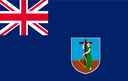
The Falkland Islands flag uses a dark blue color British emblem. The Union Card appears on the upper left corner, while the Falkland Islands National coat of arms is exhibited on the right corner.
The National coat of arms also includes a bump, a nautical ship, sea waves and the slogan ‘Desire the Right.’ The bump also signifies the importance of sheep farming. The ship signifies the Desire, it is accompanying with English navigator John Davis, who reportedly last seeing the islands in 1592. The Falkland Islands Government also notes that the flag honors this early sighting.
Falkland Island Flag Meaning and Importance
The Falkland Islands flag also joins geography, history and political distinctiveness in one Emblem. The Union Card also shows the territory’s legal link with the United Kingdom, while the National coat of arms also gives the flag into a separate Falkland character.
Today, the islands may also persist a British Overseas Territory with extensive internal authority. Argentina clashes British dominion and also denotes to the islands as Islas Malvinas. In a 2013 survey, 99.8% of contributing voters can also sustained absorbent British Overseas Territory position.
Falkland Islands History
Falkland Islands history also includes European survey, challenging expenditures, British management and 1982 Falklands historical war. A permanent British government developed in nineteenth century and Stanley developed as the capital of Falkland Island in 1845.
In April 1982, Argentina occupied the islands. British forces recouped control in June after a 74 day struggle. The islands later prolonged local independence and their 2009 Structure supported democratic establishments and the standard of freedom.
Where Are Falkland Islands Located?
A Falkland Islands location map also dwellings the archipelago in the South Atlantic, it is crudely 400 miles far from the South American mainland. A map of South America Falkland Islands view generally shows them east of southern Argentina.
The territory comprises of East Falkland, West Falkland and hundreds of smaller islands. South Georgia and the South Sandwich Islands are controlled separately as another British Foreign Territory.
Falkland Island National Currency
The Official Falkland Islands currency is Falkland Islands pound (FKP), it is conserved with pound sterling. Sterling euro and coins are also globally used.
Questions about Falkland Island
Is the Falkland Island or a country?
No. The Falkland Islands are not an independent country, it is an autonomous British Overseas Territory, the United Kingdom officially responsible for its defense and foreign affairs.
Where is Falkland Islands located?
The Falkland Islands are also located on the South Atlantic Ocean, around 400 miles east area of the South American mainland, close to the southern region of Argentina.
How to go to Falkland Islands?
Travelers can also fly from Chile on scheduled LATAM air services or also use limited UK Ministry of Defense flights from RAF Brize Norton, it is also subject to accessibility and necessities.
What is the capital of Falkland Islands Country?
Stanley is the capital city of Falkland Islands. Located on East Falkland, it is the territory’s main population centre and administrative, commercial, and transport hub.