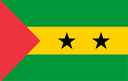
Design of the Flag of South Sudan
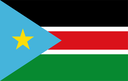
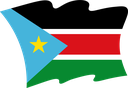
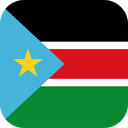
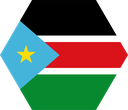
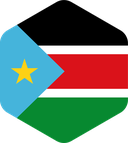
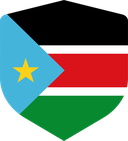
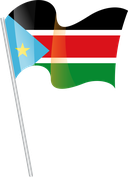
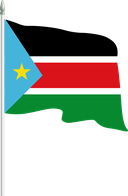
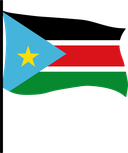
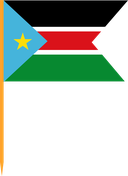
The flag of South Sudan features three horizontal stripes separated by thin white lines, with a blue triangle at the hoist.
The main elements include:
- Black stripe on the top
- Red stripe in the middle
- Green stripe at the bottom
- White fimbriations separating the stripes
- Blue triangle at the hoist with a gold five-pointed star inside
The design is bold and symbolic, combining Pan-African colors with unique national elements.
Meaning of the Colors and Symbols
Each color and symbol on the South Sudan flag carries clear national meaning.
The black color represents the people of South Sudan, emphasizing unity and shared identity.
The red color symbolizes the blood shed during the long struggle for independence and freedom.
The green color represents land, agriculture, and natural resources, highlighting hope for prosperity and self-sufficiency.
The white lines symbolize peace, hope, and unity, separating conflict from growth.
The blue triangle represents the Nile River, which is central to life, agriculture, and survival in South Sudan.
The gold star, known as the Star of Bethlehem, symbolizes unity among the states and guidance toward a peaceful future.
Together, these elements express sacrifice, unity, and hope.
Historical Background and Adoption
South Sudan’s history is marked by decades of civil war and political struggle within Sudan. Long-standing cultural, religious, and political differences fueled demands for autonomy.
The Sudan People’s Liberation Movement (SPLM) used a similar flag during the liberation struggle, which later influenced the national design.
Following a successful referendum, South Sudan gained full independence on July 9, 2011.
The national flag was officially adopted on the same day, symbolizing the transition from a liberation movement to an independent state.
More historical context can be found on the history of South Sudan page.
Cultural and National Significance
The South Sudan flag holds deep emotional importance for citizens. It represents:
- Freedom after decades of conflict
- Unity among diverse ethnic groups
- Hope for peace and national development
The flag is widely displayed during Independence Day celebrations, public ceremonies, and national events.
Among African flags, South Sudan’s design is distinctive due to the blue triangle and star, setting it apart from traditional tricolors.
Official Use and Flag Etiquette
The flag of South Sudan is flown at government buildings, schools, embassies, and public institutions.
It is displayed during diplomatic events, international meetings, and sporting competitions.
Respectful handling of the flag is encouraged. It should be kept clean, displayed correctly, and treated as a symbol of sovereignty and national dignity.
During periods of national mourning, the flag may be flown at half-mast according to official protocol.
The Flag in Modern South Sudan
In modern South Sudan, the flag symbolizes independence, resilience, and national identity. It appears in education, civic life, and international representation.
Despite ongoing challenges, the flag remains a unifying symbol for citizens and the diaspora.
The blue triangle and gold star continue to represent hope for peace, stability, and progress.
Design Strength and Recognition
The South Sudan flag is admired for its strong symbolism and clarity. The combination of stripes, triangle, and star communicates history and aspiration effectively.
Its bold colors ensure high visibility and recognition at international events.
The design reflects both liberation heritage and future goals.
Questions About the Flag of South Sudan
When was the flag of South Sudan adopted?
It was adopted on July 9, 2011.
What does the blue triangle represent?
It represents the Nile River.
What does the gold star symbolize?
It symbolizes unity and guidance.
Why are white lines included on the flag?
They represent peace and hope.
Is the South Sudan flag the same on both sides?
Yes, the design appears on both sides of the flag.