Design of the Flag of Rwanda
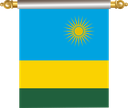
The flag of Rwanda consists of three horizontal stripes of unequal width:
- A blue stripe at the top
- A yellow stripe in the middle
- A green stripe at the bottom
In the upper right corner of the blue stripe, there is a golden sun with twenty-four rays.
The layout is clean and modern, with bright colors that reflect hope and clarity. The unequal stripe sizes add visual balance while drawing attention to the sun symbol.
Meaning of the Colors and Symbols
Each element of the Rwandan flag carries clear symbolic meaning linked to national values.
The blue color represents peace, happiness, and tranquility. It reflects Rwanda’s commitment to unity and harmony after periods of conflict.
The yellow color symbolizes economic development and prosperity. It represents optimism, growth, and the nation’s focus on rebuilding and progress.
The green color stands for hope, agriculture, and natural resources. It reflects Rwanda’s reliance on farming and respect for the environment.
The golden sun represents enlightenment, unity, and hope for the future. Its twenty-four rays symbolize light spreading across the nation, guiding Rwanda toward peace and progress.
Historical Background and Adoption
Before 2001, Rwanda used a flag similar in colors to other Pan-African designs. However, following the tragic events of the 1994 genocide, the country sought new national symbols that would represent a clear break from division and violence.
The current flag was officially adopted on October 25, 2001, reflecting Rwanda’s commitment to reconciliation and national renewal.
The redesigned flag intentionally avoided symbols linked to past conflict and focused instead on unity, development, and shared future goals. More historical context can be found on the history of Rwanda page.
Cultural and National Significance
The Rwandan flag holds deep significance as a symbol of healing and collective responsibility. It represents the nation’s determination to move forward together, regardless of ethnic or regional differences.
The flag is prominently displayed during Independence Day celebrations, national commemorations, and official ceremonies. It is also used in schools to teach values of peace and citizenship.
Among African flags, Rwanda’s design stands out for its forward-looking symbolism rather than revolutionary or colonial imagery.
Official Use and Flag Etiquette
The flag of Rwanda is flown at government buildings, schools, embassies, and public institutions. It is also displayed during international conferences, sporting events, and diplomatic occasions.
Respectful handling of the flag is strongly encouraged. It should be kept clean, displayed correctly, and treated as a symbol of unity and national dignity.
Specific guidelines exist for raising and lowering the flag during national events and periods of mourning.
The Flag in Modern Rwanda
In modern Rwanda, the flag symbolizes progress, stability, and ambition. It appears in development programs, tourism promotion, and international representation.
The sun symbol reflects Rwanda’s forward-looking national vision and its focus on innovation, education, and sustainable growth.
The flag has become a powerful image of transformation and hope in the African context.
Design Strength and Recognition
The Rwandan flag is praised for its modern design and positive symbolism. Its bright colors and sun emblem create strong visual impact while maintaining simplicity.
Unlike many flags that emphasize struggle, Rwanda’s flag emphasizes peace and future potential.
Its clear message and distinctive design ensure strong recognition globally.
Questions About the Flag of Rwanda
When was the flag of Rwanda adopted?
It was officially adopted on October 25, 2001.
What does the sun on the flag represent?
It represents enlightenment, unity, and hope.
Why did Rwanda change its flag?
To reflect national unity and a new beginning after conflict.
What do the colors of the flag symbolize?
They symbolize peace, development, and hope.
Is the Rwanda flag the same on both sides?
Yes, the design appears on both sides of the flag.