Appearance and Symbolism of National Flag
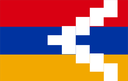
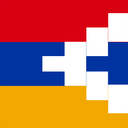
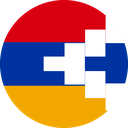
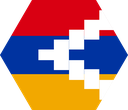
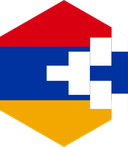
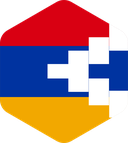
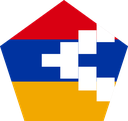
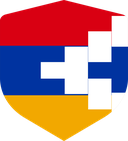
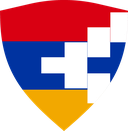
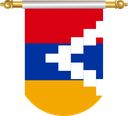
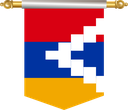
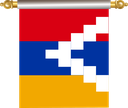
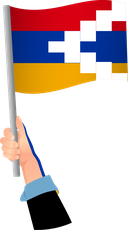
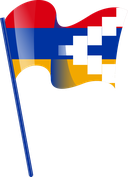
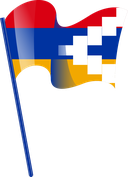
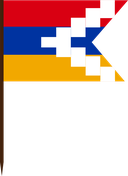
The flag of Artsakh was also based on the Armenian tricolor, using three equal horizontal stripes of red, blue, and orange color. A white color, five stepped pattern also appears at the fly end. It also resembles a customary Armenian carpet style and also forms a westward pointing shape.
The commonly described Artsakh flag meaning is the tricolor, which expresses Armenian legacy, while the white color stepped method symbolizes separation from Armenia and also an aspiration for assembly or reconsolidation. The design was approved in 1992 by the de facto Nagorno-Karabakh Republic officially and retained after, it approved the name Republic of Artsakh.
Location, Area, and Map Context
An Armenia map with Artsakh generally places with the east area of Armenia, inside Azerbaijan, in the Smaller Caucasus. These Historical maps vary because some also show the former Nagorno-Karabakh Independent Oblast, while others also show lands controlled or claimed by the de facto republic at different times.
For this reason, the Artsakh area should always be defined by its date and boundary type. The former Soviet independent oblast also covered roughly 4,400 square kilometers, but its bigger political maps are sometime displayed larger neighboring territories. An Artsakh flag map is useful only when its foundation, date, and boundaries are clearly explained.
Political History and Present Status
Artsakh history is also linked to Armenian and Azerbaijani societies, Soviet supervision, the Soviet Union’s division, and several eras of armed clash. The self-proclaimed republic are also applied de facto control over parts of Nagorno-Karabakh for many decades, but no United Nations member state also known it also as an independent.
In September 2023, Azerbaijan redeemed her control after a great military operation, and more than 100,000 national Armenians escaped to Armenia. The nationalist establishments are also announced that the republic would terminate to exist from January 2024, although some former officials advanced disputed this decision’s legal result. The flag of Artsakh now functions essentially as a historical, cultural, and political sign rather than the flag of a generally standard state.
The phrase Artsakh genocide is also used by some advocates, when describing his movement, blockade related poverty, and supposed cruelties. However, genocide is a specific legal term, and also no final international court judgment has been established that has make for the 2023 events. Liable content should feature the expression instead of presenting it as an recognized legal decision.
Currency, Emoji, and Digital Files
The Armenian dram was the main currency used under the former de facto administration. Limited Artsakh dram notes and coins also existed, but they were not widely used in daily commerce. An accurate explanation of Artsakh currency should distinguish ordinary circulation from collector-oriented issues.
There is no standard Unicode Artsakh flag emoji. Users commonly share an image, sticker, or custom icon instead. Anyone downloading an Artsakh flag PNG should also check image quality, clearness, authorized, and whether the white stepped design is accurate or not.
Questions about Artsakh Country
Is Artsakh a country or a State?
Artsakh was a self-proclaimed republic, but no United Nations member are also recognized it as independent country. Its former land is internationally standard as a part of Azerbaijan.
What is Artsakh?
Artsakh is also the Armenian name, commonly used for Nagorno-Karabakh and it also referred to the former national Armenian-led, self-proclaimed republic there.
Where is Artsakh located?
Artsakh, or Nagorno-Karabakh, lies in the South Caucasus within Azerbaijan, east of Armenia, across a mountainous area of the Lesser Caucasus.
Is the Republic of Artsakh a country?
It operated as a de facto state for decades, but lacked international recognition and ceased territorial control after Azerbaijan’s September 2023 operation.