Design of the Flag of Kosovo
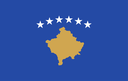
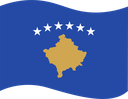
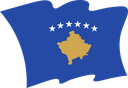
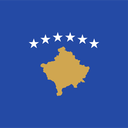
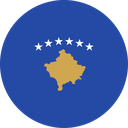
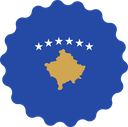
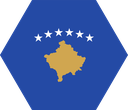
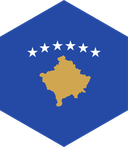
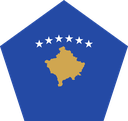
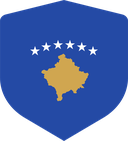
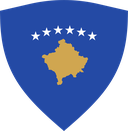
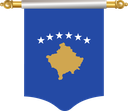
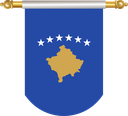
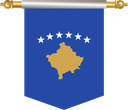
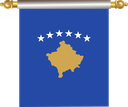
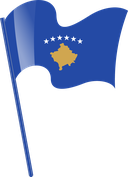
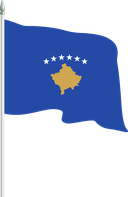
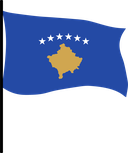
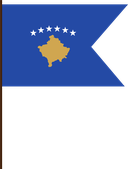
The Flag of Kosovo features a dark blue field covering the entire background.
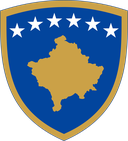
At the center of the flag is a golden silhouette map of Kosovo. Above the map are six white five-pointed stars arranged in a gentle arc.
The design is simple, balanced, and intentionally neutral, avoiding ethnic or religious imagery.
Meaning of Colors and Symbols
Each element of the Flag of Kosovo carries carefully chosen symbolic meaning.
The blue background represents peace, stability, and Kosovo’s aspiration to integrate with European institutions. Blue is also associated with neutrality and calm.
The golden map represents Kosovo itself, symbolizing homeland, identity, and territorial integrity.
The six white stars represent the major ethnic communities living in Kosovo. These include Albanians, Serbs, Turks, Bosniaks, Roma, and other communities. The stars are equal in size, symbolizing equality and shared citizenship.
The use of white represents peace, coexistence, and hope for a unified future.
Together, these elements emphasize inclusiveness, unity, and democratic values.
Historical Background of the Kosovo Flag
The Flag of Kosovo was officially adopted on February 17, 2008, the same day Kosovo declared independence from Serbia.
Before independence, Kosovo used different flags depending on political circumstances, including the flag of Serbia and the United Nations flag during international administration.
When designing a new national flag, authorities deliberately avoided symbols linked to a single ethnic group. An international design competition resulted in the current flag, chosen for its neutral and inclusive symbolism.
Readers interested in Kosovo’s political journey can explore more context on the History of Kosovo page.
Cultural and National Significance
The Flag of Kosovo holds strong symbolic importance as a representation of a new and independent state. It represents sovereignty, recognition, and the desire for peaceful coexistence.
The flag is prominently displayed during Independence Day celebrations, official ceremonies, and international events. For citizens, it symbolizes self-determination, hope, and the future of a democratic society.
Because Kosovo is home to diverse communities, the flag plays a unifying role rather than emphasizing a single cultural identity.
Relationship to Other Balkan Flags
The Flag of Kosovo stands apart from many Balkan flags that rely on historical coats of arms or ethnic symbols.
Instead, Kosovo’s flag uses modern design principles similar to flags created in the post-Cold War era. Comparing Balkan flags highlights Kosovo’s emphasis on inclusiveness and forward-looking identity.
International Recognition and Use
Kosovo’s flag is used in countries and organizations that recognize Kosovo as an independent state. It is flown at government buildings, public institutions, and diplomatic missions where recognition exists.
In international sports and cultural events, the Flag of Kosovo represents the country as a separate entity, reinforcing its presence on the global stage.
Modern Use of the Flag of Kosovo
Today, the Flag of Kosovo is flown on government buildings, schools, and public spaces across the country. It is also displayed at embassies, international forums, and sporting events representing Kosovo abroad.
The flag plays an important role in education and civic identity, helping citizens understand equality, coexistence, and national responsibility. Its continued use reinforces Kosovo’s identity as a modern European state.
Interesting Facts About the Flag of Kosovo
- It was adopted in 2008.
- It features a map of the country.
- The stars represent ethnic communities.
- The design avoids religious symbols.
- Blue reflects European aspirations.
Frequently Asked Questions
What do the stars on the Kosovo flag represent?
They represent the major ethnic communities living in Kosovo.
When was the Flag of Kosovo adopted?
It was adopted on February 17, 2008.
Why does the Kosovo flag include a map?
The map represents the homeland and national identity.
Is the Kosovo flag ethnically neutral?
Yes, it was designed to be inclusive and neutral.
Where is the Kosovo flag commonly displayed?
It is flown on public buildings and during national events.