Design of the Flag of Kiribati
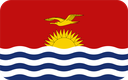
The Flag of Kiribati is divided into two main sections.
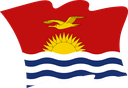
The upper half is a solid red field.
The lower half features six white and blue wavy stripes, representing the ocean.
Centered above the waves is a golden rising sun with 17 rays, and flying above the sun is a gold frigatebird with outstretched wings.
The design is visually dynamic and closely tied to the natural environment of Kiribati.
Meaning of Colors and Symbols
Each element of the Flag of Kiribati carries clear symbolic meaning.
The red color represents courage, strength, and the resilience of the people.
The blue and white waves represent the Pacific Ocean that surrounds the islands. They also symbolize peace and the importance of the sea to daily life.
The rising sun represents hope, life, and a new beginning. The 17 rays symbolize the country’s main islands.
The frigatebird represents freedom, navigation, and power over the sea. In Kiribati culture, the bird symbolizes skill, leadership, and survival in an ocean-based environment.
Together, these symbols express harmony between people, nature, and tradition.
Historical Background of the Kiribati Flag
The design of the Flag of Kiribati is based on the former colonial coat of arms created in 1937 during British administration.
Kiribati was previously known as the Gilbert Islands, a British colony. As independence approached, the coat of arms design was adapted into a national flag.
The Flag of Kiribati was officially adopted on July 12, 1979, the day the country gained independence from the United Kingdom.
The adaptation preserved cultural and natural symbolism while transforming colonial imagery into a national identity. Readers interested in this transition can explore more context on the History of Kiribati page.
Cultural and National Significance
The Flag of Kiribati holds deep cultural significance for its people. It represents survival in a remote ocean environment and respect for ancestral knowledge.
The flag is prominently displayed during Independence Day celebrations, traditional ceremonies, and official events. For citizens, it symbolizes unity, heritage, and pride in island life.
The imagery reflects the close relationship between Kiribati society and the ocean.
Relationship to Other Pacific Island Flags
The Flag of Kiribati shares oceanic themes with other Pacific flags, such as Fiji and Marshall Islands.
However, Kiribati’s flag stands out for its detailed landscape-style design and prominent use of cultural symbolism. The frigatebird and rising sun give it a unique identity among Pacific island nations.
Comparing Pacific flags highlights Kiribati’s emphasis on navigation, nature, and independence.
Modern Use of the Flag of Kiribati
Today, the Flag of Kiribati is flown on government buildings, schools, and public spaces throughout the islands. It is also displayed at embassies, international organizations, and global events representing Kiribati abroad.
The flag plays an important role in education and national identity, helping citizens understand history, geography, and cultural values. Its continued use reinforces Kiribati’s sovereignty and connection to the ocean.
Interesting Facts About the Flag of Kiribati
- It was adopted in 1979.
- The sun has 17 rays.
- The frigatebird symbolizes navigation.
- The waves represent the Pacific Ocean.
- The design evolved from a colonial coat of arms.
Frequently Asked Questions
What does the bird on the Kiribati flag represent?
It represents freedom, navigation, and skill at sea.
When was the Flag of Kiribati adopted?
It was adopted on July 12, 1979.
What do the waves on the Kiribati flag symbolize?
They symbolize the Pacific Ocean and island life.
Why does the sun have 17 rays?
They represent Kiribati’s main islands.
Where is the Kiribati flag commonly displayed?
It is flown on public buildings and during national events.