Design of the Flag of Washington
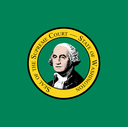
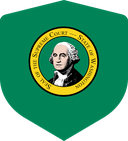
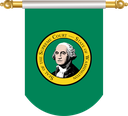
The Flag of Washington features a dark green background, a color unique among U.S. state flags.
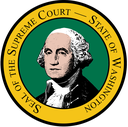
Centered on the flag is the state seal, which contains a portrait of George Washington. The seal is circular and bordered with gold accents.
Around the seal appear the words:
- “The Seal of the State of Washington”
- “1889”, the year Washington became a U.S. state
The layout is symmetrical and formal, emphasizing authority and tradition.
Meaning of Colors and Symbols
Each element of the Flag of Washington carries symbolic meaning tied to state and national identity.
The green background represents Washington’s lush forests, fertile land, and natural environment. It reflects the state’s strong connection to nature and sustainability.
The portrait of George Washington honors the first President of the United States and symbolizes leadership, integrity, and democratic values. The state was named after George Washington, making his image especially significant.
The state seal represents official authority, governance, and legitimacy.
The gold accents symbolize value, excellence, and dignity.
Together, these elements express leadership, natural wealth, and commitment to democratic principles.
Historical Background of the Washington Flag
Washington adopted its official state flag in 1923.
Before adopting the flag, the state seal had already been in use for decades. The seal itself was designed in the 1880s, shortly before Washington achieved statehood in 1889.
The choice of green as the background color was intentional, setting Washington apart from the many blue-field state flags and highlighting the region’s environmental identity.
Readers interested in Pacific Northwest history can explore more context on the History of Washington (U.S. state) page.
Cultural and State Significance
The Flag of Washington holds strong cultural significance for residents of the state.
It represents respect for national history through George Washington while emphasizing local pride in natural beauty and environmental stewardship. The flag is displayed during state holidays, official ceremonies, educational events, and civic gatherings.
For Washingtonians, the flag symbolizes balance between national heritage and regional identity.
Relationship to Other U.S. State Flags
The Flag of Washington is unique among U.S. state flags due to its green background and use of a presidential portrait.
While many state flags use blue fields and complex seals, Washington’s design is easily distinguishable from a distance. Comparing state flags highlights Washington’s emphasis on individuality and environmental symbolism.
It is one of the few state flags to feature a real historical figure prominently.
Modern Use of the Flag of Washington
Today, the Flag of Washington is flown on state government buildings, schools, courthouses, and public institutions across the state.
It is also used in official publications, educational materials, and public commemorations. The flag plays an important role in civic education, helping residents understand state history, leadership, and governance.
Its continued use reinforces Washington’s identity as a state rooted in leadership and natural beauty.
Interesting Facts About the Flag of Washington
- It was adopted in 1923
- It is the only green U.S. state flag
- It features a U.S. president’s portrait
- The seal dates back to the 1880s
- The state was named after George Washington
Questions About the Flag of Washington
Why is the Washington flag green?
It represents the state’s forests and natural environment.
Who is shown on the Washington flag?
George Washington, the first U.S. president.
When was the Flag of Washington adopted?
It was adopted in 1923.
What does the state seal represent?
It represents official authority and governance.
Where is the Washington flag commonly displayed?
On state buildings and during official events.