Design of the Flag of United States
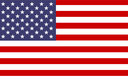
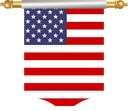
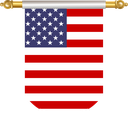
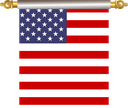
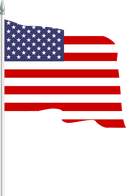
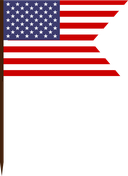
The Flag of United States consists of thirteen horizontal stripes and a blue canton.
- Seven red stripes
- Six white stripes
In the upper hoist corner, there is a blue rectangle (canton) containing fifty white five-pointed stars arranged in rows.
The stripes run horizontally across the flag, while the stars form a symmetrical pattern within the blue field.
Meaning of Colors and Symbols
Each element of the Flag of United States has a clear symbolic meaning.
The thirteen stripes represent the original thirteen colonies that declared independence from British rule in 1776.
The fifty stars represent the fifty states of the United States, symbolizing unity within a federal system.
The red color represents valor, bravery, and sacrifice.
The white color represents purity, innocence, and integrity.
The blue color represents vigilance, perseverance, and justice.
Together, the stars and stripes express freedom, unity, and shared national values.
Historical Background of the United States Flag
The first version of the Flag of United States was adopted on June 14, 1777, during the American Revolutionary War.
This early flag featured thirteen stars and thirteen stripes, though the arrangement of stars was not officially specified. As new states joined the Union, stars were added to the flag.
In 1912, President William Howard Taft standardized the arrangement of stars. The current 50-star design was adopted on July 4, 1960, following the admission of Hawaii as the 50th state.
Readers interested in independence and constitutional development can explore more context on the History of United States page.
Cultural and National Significance
The Flag of United States holds deep emotional and cultural importance for Americans.
It symbolizes freedom, democracy, and the sacrifices made by generations to protect national values. The flag is treated with respect and honor, especially during national holidays such as Independence Day, Memorial Day, and Veterans Day.
For many citizens, the flag represents opportunity, unity in diversity, and national resilience.
Flag Etiquette and Respect
The United States has specific guidelines known as the Flag Code, which outlines proper display and handling of the flag.
These guidelines emphasize respect, including rules about flying the flag, folding it properly, and displaying it at half-staff during times of mourning. While not legally enforced for private citizens, the Flag Code reflects cultural respect for the national symbol.
Relationship to Other National Flags
The Flag of United States influenced the designs of several other flags, particularly in the Americas and Pacific regions.
Its use of stars to represent political units has inspired other national and regional flags. Comparing world flags highlights the global influence of the Stars and Stripes as a symbol of independence and democracy.
Modern Use of the Flag of United States
Today, the Flag of United States is flown on government buildings, schools, military installations, and private homes across the country.
It is also displayed at embassies, international organizations, and global events representing the United States abroad. The flag plays a key role in civic education, helping citizens understand history, rights, and national responsibility.
Its continued use reinforces the United States’ identity as a nation founded on democratic principles.
Interesting Facts About the Flag of United States
- It is commonly called the Stars and Stripes.
- A new star is added for each new state.
- Flag Day is celebrated on June 14.
- The current design dates from 1960.
- The stripes have never changed in number.
Questions About the Flag of United States
What do the stars on the U.S. flag represent?
They represent the fifty states of the United States.
Why are there thirteen stripes on the flag?
They represent the original thirteen colonies.
When was the current U.S. flag adopted?
It was adopted on July 4, 1960.
What do the colors of the U.S. flag mean?
Red represents bravery, white represents purity, and blue represents justice.
Where is the U.S. flag commonly displayed?
On public buildings, homes, and during national events.