Design of the Flag of NATO
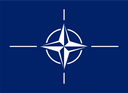
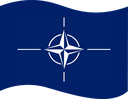
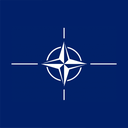
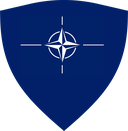
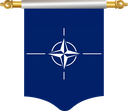
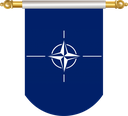
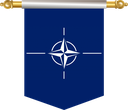
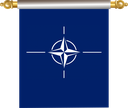
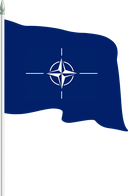
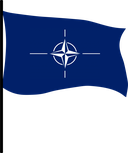
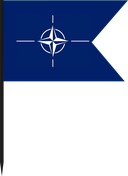
The Flag of NATO features a dark blue field with a white emblem placed at the center.
The emblem consists of:
- A four-pointed compass rose
- A circle surrounding the compass
The design is symmetrical, minimalist, and easily recognizable. There are no letters, national symbols, or additional decorations, ensuring neutrality and equal representation of all member states.
Meaning of Colors and Symbols
Each element of the Flag of NATO carries clear symbolic meaning related to security and cooperation.
The dark blue background represents peace, stability, and the Atlantic Ocean, which historically connects North America and Europe. Blue is also associated with trust and calm authority.
The white color of the emblem represents peace, integrity, and transparency in collective defense.
The compass rose symbolizes direction, guidance, and unity. It represents NATO’s role in guiding member nations toward common security goals.
The circle surrounding the compass represents unity, solidarity, and the collective nature of the alliance.
Together, these elements express cooperation, shared direction, and commitment to peace through collective defense.
Historical Background of the NATO Flag
The North Atlantic Treaty Organization, officially known as North Atlantic Treaty Organization, was established in 1949 following World War II.
The NATO emblem was adopted in 1953 to provide the alliance with a clear visual identity. The flag was created to represent unity among members while avoiding national or ideological symbols.
The design emphasized NATO’s defensive purpose and its role in maintaining peace and security across the North Atlantic region.
Readers interested in post-war security arrangements can explore more context on the History of NATO page.
Political and Military Significance
The Flag of NATO holds major political and military significance worldwide.
It represents collective defense under Article 5 of the NATO treaty, which states that an attack on one member is considered an attack on all. When the flag is displayed, it signals alliance unity and coordinated military presence.
The flag is commonly seen at military bases, joint exercises, summits, and international security conferences.
Relationship to Member States’ National Flags
The Flag of NATO is designed to complement national flags rather than replace them.
At official events, it is displayed alongside the flags of member countries, reinforcing alliance solidarity while respecting national sovereignty. Each member state maintains its own military symbols and traditions.
Comparing alliance and national flags highlights NATO’s role as a cooperative security framework rather than a political union.
Modern Use of the Flag of NATO
Today, the Flag of NATO is used at:
- NATO headquarters and command centers
- Military exercises and operations
- International summits and meetings
- Diplomatic and security forums
The flag also appears in official documents, press briefings, and educational materials related to international security. Its presence reinforces NATO’s commitment to defense, cooperation, and stability.
Interesting Facts About the Flag of NATO
- The emblem was adopted in 1953
- Blue symbolizes peace and the Atlantic region
- The compass rose represents direction and unity
- The flag avoids national symbols
- It represents collective defense
Questions About the Flag of NATO
What does the Flag of NATO represent?
It represents collective defense, unity, and security cooperation.
Why is the NATO flag blue?
Blue symbolizes peace, stability, and the Atlantic connection.
What does the compass symbol mean?
It represents direction, guidance, and unity among members.
When was the NATO flag adopted?
The emblem was adopted in 1953.
Where is the NATO flag commonly displayed?
At NATO headquarters, military bases, and official events.