Design of the Flag of Micronesia
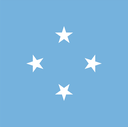
The flag of Micronesia features a light blue field with four white five-pointed stars arranged in a diamond shape at the center of the flag. The design is clean and uncluttered, making it easy to recognize and reproduce.
The light blue background dominates the flag and provides a visual connection to the Pacific Ocean. The four stars are evenly spaced and identical in size, symbolizing balance and equality among the nation’s states. The absence of additional symbols reflects simplicity and unity rather than complexity.
Meaning of the Colors and Symbols
Every element of the Micronesia flag has clear symbolic meaning. The light blue background represents the Pacific Ocean, which surrounds and connects the islands of Micronesia. It also symbolizes peace, freedom, and openness, values that are central to the nation’s identity.
The four white stars represent the four states of the Federated States of Micronesia: Yap, Chuuk, Pohnpei, and Kosrae. Their equal size reflects political equality among the states, while their diamond arrangement emphasizes unity and cooperation.
The white color of the stars symbolizes peace, harmony, and purity of intention, highlighting Micronesia’s commitment to peaceful relations both domestically and internationally.
Historical Background and Adoption
Before independence, Micronesia was part of the Trust Territory of the Pacific Islands, administered by the United States after World War II. During this period, a different flag featuring six stars was used to represent the broader trust territory.
As Micronesia moved toward self-government, a new national flag was required to reflect its unique political structure. The flag of Micronesia was officially adopted on November 30, 1979, the same year the country became a self-governing federation. Full independence followed in 1986 under a Compact of Free Association with the United States. More historical context is available on the history of Micronesia page.
Political Structure and National Identity
The flag plays an important role in expressing Micronesia’s federal system. Each star stands for one state, reinforcing the idea that the nation is built on cooperation rather than centralization.
Unlike many national flags that emphasize military strength or revolutionary history, the Micronesia flag highlights peaceful unity and shared geography. This approach reflects the country’s diplomatic priorities and island culture, where cooperation and community are essential for survival.
Cultural and Regional Significance
The Micronesia flag is widely displayed during Independence Day celebrations, official ceremonies, and international meetings. It represents the country at the United Nations and regional Pacific organizations.
Within the Pacific region, the flag is often compared with the Flag of the Marshall Islands and the Flag of Palau, which also use blue fields to represent the ocean. However, Micronesia’s four-star design clearly distinguishes it from neighboring island nations.
Official Use and Display
The flag of Micronesia is flown at government buildings, schools, embassies, and public institutions. It is also displayed on ships registered in the country and during international sporting events.
While flag laws are not overly strict, respectful handling is encouraged. The flag is usually raised at sunrise and lowered at sunset during official observances, symbolizing respect for national sovereignty.
Design Simplicity and Global Recognition
One of the strengths of the Micronesia flag is its simplicity. The limited use of colors and symbols ensures easy recognition and strong symbolic clarity. This simplicity aligns with modern flag design principles while remaining deeply rooted in national meaning.
The flag’s calm appearance also reflects Micronesia’s peaceful approach to international relations and its focus on environmental and regional cooperation.
Questions About the Flag of Micronesia
When was the flag of Micronesia adopted?
The flag was adopted on November 30, 1979.
What do the four stars on the flag represent?
They represent the four states: Yap, Chuuk, Pohnpei, and Kosrae.
Why is the background light blue?
It represents the Pacific Ocean and symbolizes peace and freedom.
Did Micronesia use a different flag before independence?
Yes, it used the Trust Territory flag with six stars.
Is the Micronesia flag the same on both sides?
Yes, the design is identical on both sides.