Design of the Flag of Sri Lanka
The Flag of Sri Lanka has a complex but balanced design.
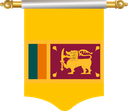
The main field is maroon, featuring a golden lion holding a sword facing the hoist side. Surrounding the maroon field is a gold border.
On the hoist side are two vertical stripes:
- Green stripe
- Orange stripe
At each corner of the maroon field are four golden Bo leaves, replacing older spear symbols.
The overall design reflects tradition, authority, and cultural harmony.
Meaning of Colors and Symbols
Every element of the Flag of Sri Lanka has deep symbolic meaning.
The lion represents bravery, strength, and sovereignty. It originates from ancient Sinhalese kings and symbolizes national courage.
The sword represents readiness to defend the nation and uphold justice.
The maroon background represents the Sinhalese ethnic majority and their heritage.
The green stripe represents the Muslim community of Sri Lanka and symbolizes harmony.
The orange stripe represents the Tamil community and cultural diversity.
The gold border represents unity among all communities.
The Bo leaves symbolize Buddhism, purity, compassion, and enlightenment. They also represent four virtues: loving-kindness, compassion, sympathetic joy, and equanimity.
Together, these elements express unity through diversity.
Historical Background of the Sri Lanka Flag
The origins of the Flag of Sri Lanka date back over 2,000 years, linked to ancient Sinhalese kingdoms.
The lion symbol was historically used by Sri Lankan kings and became a national emblem over centuries. During colonial rule, the flag was not officially used.
After independence from Britain in 1948, Sri Lanka restored the lion flag as the national flag. Later modifications added the green and orange stripes to represent minority communities.
The Bo leaves replaced spearheads in 1972, emphasizing peace and Buddhist values.
Readers interested in early kingdoms and colonial history can explore more context on the History of Sri Lanka page.
Cultural and National Significance
The Flag of Sri Lanka holds deep emotional importance. It represents independence, unity, and national pride.
The flag is prominently displayed during Independence Day, religious festivals, state ceremonies, and international events. For Sri Lankans, it symbolizes resilience, cultural continuity, and coexistence among communities.
The Lion Flag is also widely respected among the Sri Lankan diaspora worldwide.
Relationship to Other Asian Flags
The Flag of Sri Lanka stands out among Asian national flags due to its detailed symbolism and historical depth.
While many Asian flags use stars or simple stripes, Sri Lanka’s flag preserves ancient royal symbolism. Comparing Asian flags highlights Sri Lanka’s emphasis on heritage and cultural storytelling.
Modern Use of the Flag of Sri Lanka
Today, the Flag of Sri Lanka is flown on government buildings, schools, temples, and public institutions across the country. It is also displayed at embassies, international organizations, and sporting events representing Sri Lanka abroad.
The flag plays an important role in education, helping citizens understand national values, history, and unity. Its continued use reinforces Sri Lanka’s identity as a nation rooted in tradition and diversity.
Interesting Facts About the Flag of Sri Lanka
- It is known as the Lion Flag.
- The lion dates back over 2,000 years.
- Bo leaves replaced spearheads in 1972.
- It represents multiple ethnic communities.
- It is one of the world’s most symbolic flags.
Questions About the Flag of Sri Lanka
What does the lion on the Sri Lanka flag represent?
It represents bravery, strength, and sovereignty.
Why are there green and orange stripes on the flag?
They represent Muslim and Tamil communities.
What do the Bo leaves symbolize?
They symbolize Buddhism and moral virtues.
When was the modern Sri Lanka flag adopted?
It was finalized in 1972.
Why is the Sri Lanka flag so detailed?
It reflects ancient history, religion, and unity.