State of Florida Flag History
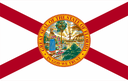
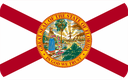
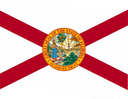
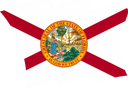
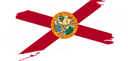
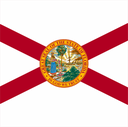
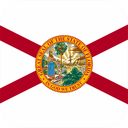
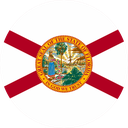
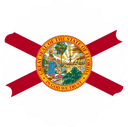
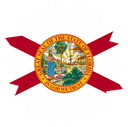
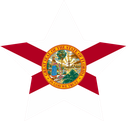
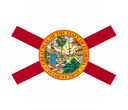
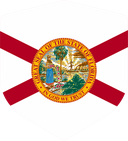
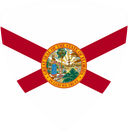
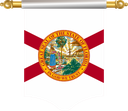
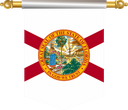
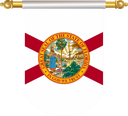
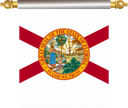
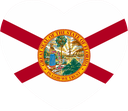
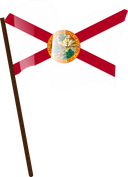
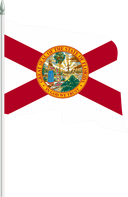
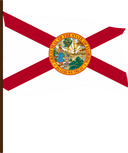
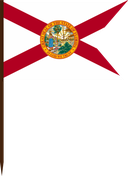
The current state flag of Florida dates to 1900, when electorates approved sloping red color bars to the previous flag design. From 1868 to 1900, Florida’s flag design contains a white color field with the state seal in the center. Governor Francis P. Fleming be recommended the red color cross, so the banner would not look like a white color flag of surrender when still hanging at institutes and building.
Florida Flag Meaning
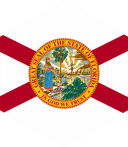
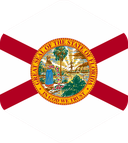
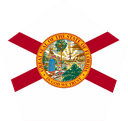
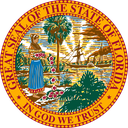
The state flag of Florida contain the Great Seal at its center in design. The seal comprises a Seminole woman, sabal palm, water, steamboat, sunlight and the slogan ‘In God We Trust.’ These elements reference Florida’s landscape, history, and official identity.
Readers studying Florida flag meaning should rely on documented state sources because popular explanations sometimes mix established history with interpretation.
Where Florida Is Located
A Florida region map also shows, Florida is located on the southeastern region of United States. Georgia and Alabama share his land border to the north, the Atlantic Ocean deceits on east and the Gulf of Mexico denigrations on west area.
Florida is geologically nearby the Cuba and The Bahamas. Its isthmus, Panhandle, Florida Keys and long seashore can also create its distinct shape.
Florida Counties and Regions
A county and city map of Florida also subsists 67 counties and 411 incorporated municipalities, including cities, towns and native villages. Tallahassee is capital of the state of Florida.
Florida also ranges around 65,758 square miles area. A Florida region map can also help readers to detach the Panhandle, North Florida, Central Florida and South Florida region.
Florida Religion and National Language
Florida's religion includes Christianity, it is the largest religious belief, together with Jewish, Muslim, Buddhist, Hindu, other religious groups and residents with also obtain no religious relationship.
For National language Florida, English is the official language. Survey data show that 30.6% of residents matured five and older are also speak a language other than English at home or outside.
Why the Flag Matters
The state flag of Florida connects the state seal, government, old history and regional identity in one Emblem. For precise research, official flag bases and reliable maps can also provide the richest background.
Questions about Florida State
What are Florida people called?
People from Florida are also called Floridians. The word applies generally to residents of the state, whether they were born there or moved there from away the Country.
What is the Capital of Florida’s state?
Florida’s state capital is Tallahassee. It is Located on the Panhandle, it has also worked as the capital since the state period remains the center of National government.
What is the area size of the state of Florida?
Florida covers around 65,758 square miles area, including roughly 53,625 square miles of land area and 12,133 square miles of water assets statewide.
Does Florida have a National flag?
Yes. Florida has an official state flag, it also featuring a red color diagonal cross on a white color field, with the Great Seal of Florida displayed at the center of Flag Design.
How many cities are there in Florida State?
Florida has 411 incorporated municipalities, including places legally designated as cities, towns, and villages. Therefore, not every municipality in Florida is officially classified as a city.