Design of the Flag of Vermont
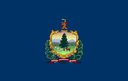
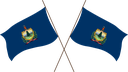
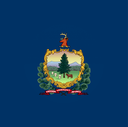
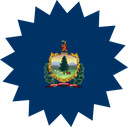
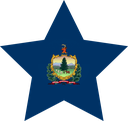
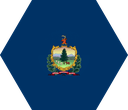
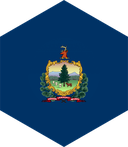
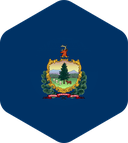
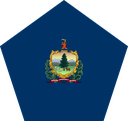
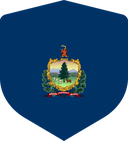
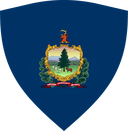
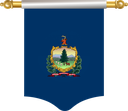
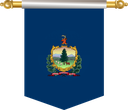
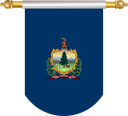
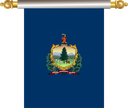
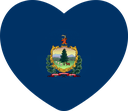
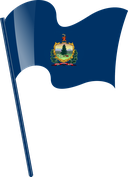
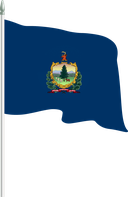
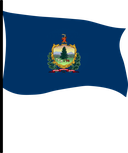
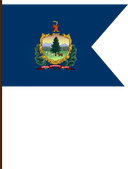
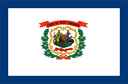
The Flag of Vermont features a dark blue field with the state coat of arms centered on the flag.
Above the coat of arms is the word “Vermont” in gold lettering. The emblem is detailed and framed, standing out clearly against the blue background.
The overall layout follows the traditional style used by many U.S. state flags, with emphasis on official symbolism rather than abstract design.
Meaning of Colors and Symbols
Each element of the Flag of Vermont carries specific meaning tied to the state’s identity.
The blue background represents loyalty, perseverance, and justice. It also reflects Vermont’s skies and calm natural environment.
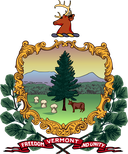
The state coat of arms includes several important symbols:
- A green pine tree, representing Vermont’s vast forests and natural resources
- Wheat sheaves, symbolizing agriculture and rural life
- A cow, representing dairy farming, one of Vermont’s most important industries
- Mountains and landscape, reflecting Vermont’s terrain and scenic beauty
At the bottom of the coat of arms appears the state motto “Freedom and Unity”, which represents the balance between individual liberty and collective responsibility.
Together, these symbols express environmental pride, self-sufficiency, and community values.
Historical Background of the Vermont Flag
The Flag of Vermont was officially adopted in 1923.
Before adopting its current flag, Vermont briefly used a design similar to the U.S. flag, which caused confusion. To establish a clearer state identity, Vermont adopted a flag featuring its official coat of arms on a blue field.
The coat of arms itself dates back to the late 18th century, reflecting Vermont’s early years as an independent republic before joining the United States in 1791.
Readers interested in early statehood and independence can explore more context on the History of Vermont page.
Cultural and State Significance
The Flag of Vermont holds strong cultural significance for residents of the state.
It represents Vermont’s deep respect for nature, local agriculture, and independent thinking. The motto “Freedom and Unity” is especially meaningful, emphasizing Vermont’s belief in personal liberty alongside social responsibility.
The flag is displayed during state holidays, civic events, educational programs, and public ceremonies. For Vermonters, it symbolizes pride in rural heritage and democratic values.
Relationship to Other U.S. State Flags
The Flag of Vermont is similar in structure to many U.S. state flags that feature a state seal or coat of arms on a blue background.
However, Vermont’s strong emphasis on nature and agriculture makes its symbolism particularly distinctive. Comparing state flags highlights how Vermont prioritizes environmental identity more than many other states.
Its motto also stands out as one of the most concise and meaningful among U.S. states.
Modern Use of the Flag of Vermont
Today, the Flag of Vermont is flown on state government buildings, schools, courthouses, and public institutions across the state.
It is also used in official documents, educational materials, and cultural displays. The flag plays an important role in civic education, helping residents understand Vermont’s history, values, and commitment to sustainability.
Its continued use reinforces Vermont’s identity as a state that values both freedom and cooperation.
Interesting Facts About the Flag of Vermont
- It was adopted in 1923
- Vermont was once an independent republic
- The motto reads “Freedom and Unity”
- Agriculture is a central theme
- Pine trees symbolize natural resources
Questions About the Flag of Vermont
What does the pine tree on the Vermont flag represent?
It represents Vermont’s forests and natural resources.
When was the Flag of Vermont adopted?
It was adopted in 1923.
What does the motto “Freedom and Unity” mean?
It reflects balance between individual liberty and community responsibility.
Why is agriculture shown on the flag?
Because farming and dairy are central to Vermont’s economy.
Where is the Vermont flag commonly displayed?
On state buildings and during official events.