Design of the Flag of Armenia
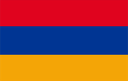
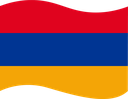
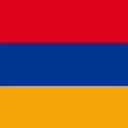
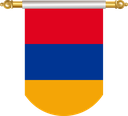
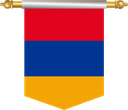
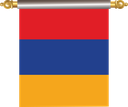
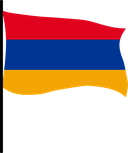
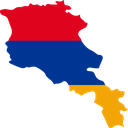
The flag of Armenia consists of three horizontal stripes of equal width. The colors appear from top to bottom as red, blue, and orange. The design is clean, balanced, and free of additional symbols, making it easily recognizable.
The horizontal tricolor layout reflects a traditional flag structure that emphasizes equality and unity. The absence of emblems or text allows the colors themselves to communicate meaning. This simplicity ensures that the flag is versatile and visually strong in both national and international settings.
Meaning of Colors and Symbols
Each color on the Armenia flag carries deep symbolic meaning. The red stripe represents the Armenian people’s struggle for survival, freedom, and independence. It also symbolizes courage, strength, and the blood shed to protect the nation and its cultural heritage.
The blue stripe represents peace, stability, and the Armenian sky. It reflects the desire of the Armenian people to live under peaceful conditions and maintain harmony with the world around them.
The orange stripe, sometimes described as apricot-colored, represents creativity, hard work, and the talent of the Armenian people. It symbolizes the nation’s resilience and commitment to progress. Together, these colors express past sacrifice, present hope, and future determination.
Historical Background of the Armenia Flag
The modern flag of Armenia was officially adopted on August 24, 1990, shortly before the country regained independence from the Soviet Union. However, the tricolor design has deeper roots in Armenian history and was used during earlier independence movements.
Following centuries of foreign rule, the re-adoption of the tricolor flag marked a return to national identity. During the Soviet era, Armenia used a different flag design, but the restoration of the red, blue, and orange stripes symbolized renewed sovereignty. Readers interested in the broader historical journey of the nation can explore the History of Armenia page for more detailed background.
Cultural and National Significance
The flag of Armenia holds strong emotional value for Armenians both within the country and across the global diaspora. It is a symbol of unity, survival, and cultural continuity. The flag is prominently displayed during national holidays, remembrance days, and cultural celebrations.
For many Armenians, the flag represents a shared identity shaped by history, tradition, and perseverance. It is often used during international events, sporting competitions, and community gatherings to express pride and solidarity.
Relationship to Other National Flags
The Armenia flag follows a classic tricolor format similar to many European and regional flags. However, its color symbolism and historical context make it distinct. The use of orange instead of yellow sets it apart visually and culturally.
Visitors exploring regional flags may notice how Armenia’s design emphasizes cultural values rather than political ideology. The flag stands as a representation of heritage and national spirit rather than complex symbolism.
Modern Use of the Flag of Armenia
Today, the flag of Armenia is widely flown on government buildings, schools, and public spaces throughout the country. It is also displayed at diplomatic missions and international events, representing Armenia on the global stage.
The flag is used in education, tourism promotion, and cultural representation. Its consistent use since independence reinforces its role as a stable and respected national symbol.
Interesting Facts About the Flag of Armenia
- The flag was officially adopted in 1990.
- It uses red, blue, and orange horizontal stripes.
- Orange is sometimes called the apricot color, a national symbol.
- The tricolor design dates back to earlier independence movements.
- The flag reflects cultural values rather than political imagery.
Frequently Asked Questions
What do the colors of the Armenia flag represent?
Red symbolizes struggle and courage, blue represents peace, and orange reflects creativity and hard work.
When was the flag of Armenia adopted?
The current flag was adopted on August 24, 1990.
Did Armenia use a different flag during the Soviet era?
Yes, Armenia used a Soviet-style flag before restoring the tricolor.
Why does the Armenia flag not include a coat of arms?
The design emphasizes simplicity and unity through color symbolism.
Is the Armenia flag used internationally?
Yes, it is recognized worldwide as the national flag of Armenia.