Design of the Flag of Gambia
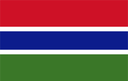
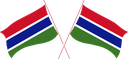
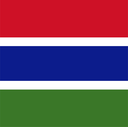
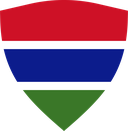
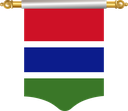
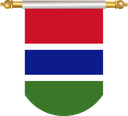
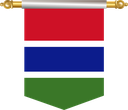
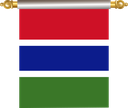
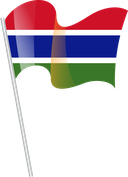
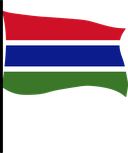
The Flag of Gambia consists of three horizontal stripes separated by thin white lines. From top to bottom, the main colors are red, blue, and green.
The red stripe appears at the top, followed by a thin white line, then a blue stripe in the center, another thin white line, and finally a green stripe at the bottom. The equal spacing and clean separation give the flag a clear and organized appearance.
Meaning of Colors and Symbols
Each color on the Flag of Gambia has a direct and practical meaning tied to the country’s geography and values.
The red stripe represents the sun and the savanna landscape. It also symbolizes warmth, courage, and the climate of the region.
The blue stripe represents the Gambia River, the country’s most important natural feature. The river runs through the entire nation and is central to trade, agriculture, and daily life.
The green stripe represents forests, agriculture, and natural vegetation. It symbolizes fertility, growth, and the importance of farming to the Gambian economy.
The white lines symbolize peace and unity. They separate the main colors to show harmony between the land, river, and people of the nation.
Historical Background of the Gambia Flag
The Flag of Gambia was officially adopted on February 18, 1965, the day the country gained independence from British rule. Unlike many newly independent African states, Gambia chose a flag design that avoided political symbolism.
The design was created by a local accountant rather than a political party, ensuring neutrality. This decision helped the flag remain widely accepted across political changes. Readers interested in this period can explore more context on the History of Gambia page.
Cultural and National Significance
The Flag of Gambia holds strong national importance as a symbol of unity and peaceful coexistence. It reflects the country’s relatively stable political history and focus on national harmony.
The flag is prominently displayed during Independence Day celebrations, national holidays, and official ceremonies. For Gambians, it represents pride in geography, culture, and sovereignty.
Relationship to Other African Flags
The Flag of Gambia stands out among African national flags because it does not use traditional Pan-African colors in a symbolic order. Instead, it focuses on geography and neutrality.
Compared to other West African flags, Gambia’s flag is unique for including white separator lines and emphasizing a river as the central national symbol. This gives it a distinctive identity within the region.
Modern Use of the Flag of Gambia
Today, the Flag of Gambia is flown on government buildings, schools, and public spaces throughout the country. It is also displayed at embassies, international organizations, and sporting events representing Gambia abroad.
The flag plays an important role in education and civic life, helping citizens understand national geography, independence, and unity. Its continued use reinforces Gambia’s identity as a peaceful West African nation.
Interesting Facts About the Flag of Gambia
- The flag was adopted in 1965.
- It represents land, river, and agriculture.
- The blue stripe symbolizes the Gambia River.
- The design avoids political ideology.
- It has remained unchanged since independence.
Frequently Asked Questions
What does the blue stripe on the Gambia flag represent?
It represents the Gambia River.
Why does the Gambia flag include white lines?
They symbolize peace and unity.
When was the Flag of Gambia adopted?
It was adopted on February 18, 1965.
Does the Gambia flag use Pan-African colors?
No, it focuses on geography rather than ideology.
Where is the Gambia flag commonly displayed?
It is flown on public buildings and during national events.