Design of the Flag of Serbia
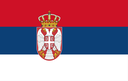
The flag of Serbia consists of three horizontal stripes of equal height:
- Red on the top
- Blue in the middle
- White on the bottom
On the hoist side, slightly offset from the center, appears the coat of arms of Serbia.
This layout combines a traditional Slavic tricolor with a powerful national emblem, giving the flag both simplicity and depth. A civil version without the coat of arms is also used in some contexts.
Meaning of the Colors
Each color on the Serbian flag carries symbolic meaning rooted in history and Slavic tradition.
The red color represents courage, sacrifice, and the blood shed in defense of the nation.
The blue color symbolizes freedom, justice, and loyalty, reflecting the Serbian people’s desire for independence and fairness.
The white color represents peace, purity, and honesty, emphasizing moral values and hope for stability.
Together, these colors are known as Pan-Slavic colors, shared by several Slavic nations to express cultural and historical unity.
Meaning of the Coat of Arms
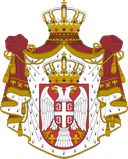
The coat of arms of Serbia is one of the most important national symbols and adds strong identity to the flag.
It features:
- A white double-headed eagle, symbolizing sovereignty, strength, and the connection between church and state
- A red shield with a white cross and four firesteels (ocila)
The cross and firesteels are a traditional Serbian symbol often interpreted as representing unity and faith. A common interpretation of the four firesteels is the phrase meaning “Only unity saves the Serbs.”
Above the shield is a crown, representing historical statehood and continuity.
Historical Background and Adoption
Serbia’s tricolor has origins in the early 19th century, during uprisings against Ottoman rule. Inspired partly by Slavic and European revolutionary movements, the red-blue-white combination became a symbol of Serbian resistance and autonomy.
The tricolor was officially recognized in 1835, making it one of the earliest Slavic national flags.
During the Yugoslav period, variations of the flag were used, often including socialist symbols. After the dissolution of Yugoslavia and later the separation of Serbia and Montenegro, Serbia reasserted its national symbols.
The current version of the flag, featuring the modern coat of arms, was officially adopted in 2010. More historical context can be found on the history of Serbia page.
Cultural and National Significance
The Serbian flag holds strong emotional and cultural significance. It is proudly displayed during:
- Statehood Day and national holidays
- Religious and cultural celebrations
- Sporting events and international competitions
The flag represents unity among Serbs both within the country and in the diaspora.
Among European flags, Serbia’s design is often compared with the Flag of Russia and the Flag of Slovakia due to shared Slavic colors, though Serbia’s coat of arms makes it distinct.
Official Use and Flag Etiquette
The flag of Serbia is flown at government buildings, schools, embassies, and public institutions.
It is displayed during official ceremonies, diplomatic meetings, and national commemorations.
Respectful handling of the flag is encouraged. It should be kept clean and displayed correctly, especially when the version with the coat of arms is used.
During national mourning, the flag may be flown at half-mast according to official protocol.
The Flag in Modern Serbia
In modern Serbia, the flag symbolizes sovereignty, tradition, and national continuity. It appears in education, tourism, state branding, and media.
The coat of arms reinforces a connection to medieval Serbian statehood while the tricolor reflects modern European identity.
The flag remains a unifying symbol across political and cultural differences.
Design Strength and Recognition
The Serbian flag is admired for its balanced combination of simplicity and symbolism. The tricolor provides clarity, while the coat of arms adds historical depth.
Its Pan-Slavic colors ensure regional recognition, and the eagle emblem gives it a strong national character.
The design effectively bridges past and present.
Questions About the Flag of Serbia
When was the current flag of Serbia adopted?
It was officially adopted in 2010.
What do the colors of the Serbian flag represent?
They represent sacrifice, freedom, and peace.
What does the double-headed eagle symbolize?
It symbolizes sovereignty and strength.
Why does Serbia use Pan-Slavic colors?
They represent shared Slavic heritage.
Is the Serbian flag the same on both sides?
Yes, the design appears on both sides of the flag.