Design of the Flag of Turkmenistan
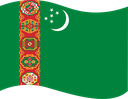
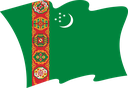
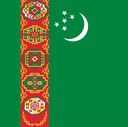
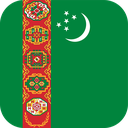
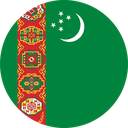
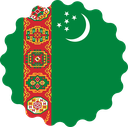
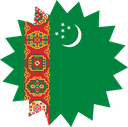
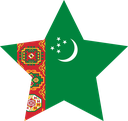
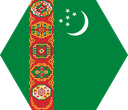
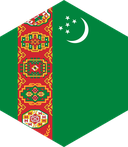
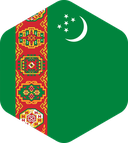
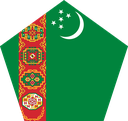
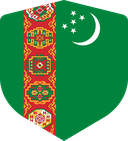
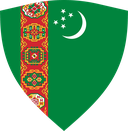
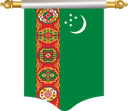
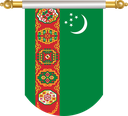
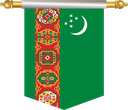
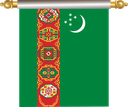
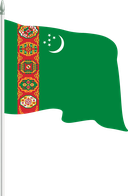
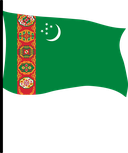
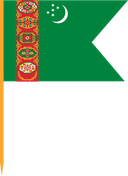
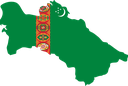
The Flag of Turkmenistan features a green field covering the entire background.
On the hoist side is a vertical red stripe containing five traditional carpet guls arranged vertically. Below the guls are two crossed olive branches.
To the right of the red stripe, on the green field, is a white crescent accompanied by five white five-pointed stars, arranged in a semicircle.
The design is complex yet carefully balanced.
Meaning of Colors and Symbols
Each element of the Flag of Turkmenistan carries deep cultural and national meaning.
The green background represents Islam, peace, and prosperity. Green is also associated with growth and renewal.
The red stripe symbolizes courage and strength, but more importantly it represents Turkmen cultural identity.
The five carpet guls represent the five major traditional Turkmen tribes. Carpet weaving is a central element of Turkmen heritage and national pride.
The olive branches symbolize peace and Turkmenistan’s policy of permanent neutrality, which is internationally recognized.
The white crescent represents a bright future and is linked to Islamic tradition.
The five stars represent the five regions of Turkmenistan and symbolize unity and completeness.
Together, these elements express heritage, neutrality, unity, and independence.
Historical Background of the Turkmenistan Flag
The Flag of Turkmenistan was officially adopted on February 19, 1992, following independence from the Soviet Union in 1991.
Before independence, Turkmenistan used Soviet-era flags with communist symbolism. The new national flag was designed to reflect indigenous culture and national identity.
In 1997, the olive branches were added to reflect Turkmenistan’s officially declared status as a permanently neutral state.
Readers interested in post-Soviet transformation can explore more context on the History of Turkmenistan page.
Cultural and National Significance
The Flag of Turkmenistan holds profound cultural importance. It represents the nation’s respect for tradition, tribal heritage, and craftsmanship.
The flag is prominently displayed during Independence Day, Neutrality Day, state ceremonies, and cultural festivals. For Turkmen citizens, it symbolizes dignity, peace, and continuity with ancestral traditions.
The carpet motifs are especially meaningful as a symbol of identity passed down through generations.
Relationship to Other Central Asian Flags
The Flag of Turkmenistan stands apart from other Central Asian national flags, which often use simpler stripes or emblems.
Its detailed carpet designs make it unique among world flags. While other Central Asian flags emphasize geography or modern symbolism, Turkmenistan highlights traditional culture.
Comparing Central Asian flags shows how Turkmenistan strongly emphasizes heritage over abstraction.
Modern Use of the Flag of Turkmenistan
Today, the Flag of Turkmenistan is flown on government buildings, schools, public institutions, and national landmarks throughout the country. It is also displayed at embassies, international organizations, and global events representing Turkmenistan abroad.
The flag plays an important role in education and civic identity, helping citizens understand neutrality, unity, and cultural pride. Its continued use reinforces Turkmenistan’s image as a sovereign and tradition-focused nation.
Interesting Facts About the Flag of Turkmenistan
- It is one of the most detailed flags in the world.
- It includes traditional carpet patterns.
- Olive branches symbolize neutrality.
- Five stars represent five regions.
- The design reflects tribal heritage.
Questions About the Flag of Turkmenistan
What do the carpet symbols on the Turkmenistan flag represent?
They represent the five major Turkmen tribes.
Why does the flag include olive branches?
They symbolize peace and permanent neutrality.
When was the Flag of Turkmenistan adopted?
It was adopted in 1992 and updated in 1997.
What does the crescent on the flag symbolize?
It represents a bright future and Islamic heritage.
Where is the Turkmenistan flag commonly displayed?
On public buildings and during national events.