Design of the Flag of Sint Eustatius
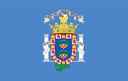
The flag of Sint Eustatius features a white field with a blue border surrounding the edges of the flag.
At the center is a green diamond, inside which appears:
- A golden star
- A blue scroll bearing the words “SUPERBA ET CONFIDENS”
The design is symmetrical and distinctive, combining simple shapes with meaningful symbols that reflect the island’s history and values.
Meaning of the Colors and Symbols
Each element of the Sint Eustatius flag carries symbolic meaning.
The white background represents peace, clarity, and harmony, reflecting the island’s calm character and community spirit.
The blue border symbolizes the Caribbean Sea surrounding the island and also represents loyalty and stability.
The green diamond represents the lush land and natural environment of Sint Eustatius, highlighting agriculture and natural beauty.
The golden star symbolizes hope, guidance, and the island’s bright future. It also reflects the island’s role as a guiding point in Caribbean history.
The motto “Superba et Confidens”, meaning “Proud and Confident”, expresses local pride, resilience, and confidence in identity.
Historical Background and Adoption
Sint Eustatius has a rich colonial history, having been governed by several European powers before becoming part of the Dutch Caribbean.
The island gained global recognition on November 16, 1776, when it became the first foreign entity to formally recognize the United States by saluting an American ship.
Despite this history, Sint Eustatius did not have its own flag for much of its past, instead using Dutch colonial symbols.
The current flag was officially adopted in 2004, following a public design process that aimed to reflect local identity and heritage.
After the dissolution of the Netherlands Antilles in 2010, Sint Eustatius became a special municipality of the Netherlands, and the flag remained unchanged.
More historical background can be found on the history of Sint Eustatius page.
Cultural and Local Significance
The Sint Eustatius flag holds strong local significance and is proudly displayed during:
- Statia Day celebrations
- Cultural festivals
- Community events
- Local government ceremonies
For residents, the flag represents independence of spirit and pride in the island’s unique historical role.
Among Caribbean flags, Sint Eustatius stands out for its border design and central diamond symbolism.
Relationship with the Flag of the Netherlands
As a special municipality, the Flag of the Netherlands is used for national and international representation.
The Sint Eustatius flag is used locally to express island identity. Both flags are often displayed together during official events, reflecting constitutional status and local pride.
This dual-flag usage mirrors the island’s political and cultural reality.
Official Use and Flag Etiquette
The flag of Sint Eustatius is flown at local government buildings, schools, and public spaces.
There are no complex restrictions on civilian use, and residents freely display the flag during celebrations.
Respectful handling of the flag is encouraged, as it represents local unity and heritage.
The flag is often displayed alongside other Dutch Caribbean flags at regional events.
The Flag in Modern Sint Eustatius
In modern Sint Eustatius, the flag symbolizes confidence, heritage, and community strength. It appears in tourism promotion, education, and cultural branding.
The motto continues to resonate with residents, reinforcing pride in the island’s past and confidence in its future.
Despite its small size, Sint Eustatius maintains a strong and distinct visual identity through its flag.
Design Strength and Recognition
The Sint Eustatius flag is admired for its balanced composition and meaningful symbolism. The blue border frames the design effectively, while the central diamond draws attention.
The inclusion of a motto adds depth without overcrowding the flag.
Its unique layout ensures strong recognition among Caribbean territories.
Questions About the Flag of Sint Eustatius
When was the flag of Sint Eustatius adopted?
It was officially adopted in 2004.
What does the motto on the flag mean?
“Superba et Confidens” means “Proud and Confident.”
Is Sint Eustatius an independent country?
No, it is a special municipality of the Netherlands.
Why does the flag have a blue border?
It represents the surrounding sea and stability.
Is the Sint Eustatius flag the same on both sides?
Yes, the design appears on both sides of the flag.