Design of the Flag of Russia
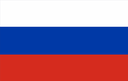
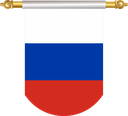
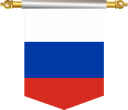
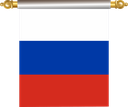
The flag of Russia consists of three horizontal stripes of equal height. From top to bottom, the colors are:
The design is simple and symmetrical, with no emblem, text, or additional symbols in the national version. This clean layout allows the colors themselves to carry the symbolic meaning.
The Russian tricolor has influenced the designs of many other national flags, particularly in Eastern Europe and among Slavic nations.
Meaning of the Colors
The colors of the Russian flag have been interpreted in several traditional and modern ways.
The white stripe commonly represents peace, purity, and honesty. It is also associated with openness and moral integrity.
The blue stripe symbolizes faith, loyalty, and stability. Blue is traditionally linked to protection and unity in Russian culture.
The red stripe represents strength, courage, and the sacrifices made in defense of the nation. Red has long been a powerful color in Russian history, symbolizing both bravery and state authority.
Together, these colors express national unity, resilience, and continuity.
Historical Origins of the Russian Tricolor
The origins of the Russian flag date back to the late 17th century, during the reign of Peter the Great. Inspired by Dutch ship flags, Peter introduced the white, blue, and red tricolor for use on Russian merchant vessels.
Over time, the tricolor became associated with Russian identity and statehood. In the 19th century, it was widely recognized as the national flag of the Russian Empire.
Although alternative flags were briefly used during different political periods, the tricolor remained deeply embedded in national consciousness. More historical context can be found on the history of Russia page.
The Flag During the Soviet Era
Following the Russian Revolution of 1917, the tricolor was replaced by the Soviet red flag, featuring the hammer and sickle. This flag represented communist ideology rather than national tradition.
For more than seven decades, the Russian tricolor was not used officially, though it remained a symbol of pre-Soviet identity.
As the Soviet Union began to dissolve, the tricolor re-emerged as a symbol of political change and national revival.
Restoration of the Modern Flag
In 1991, during the collapse of the Soviet Union, the white-blue-red tricolor was officially restored as the national flag of the Russian Federation.
The restoration symbolized a return to historical roots and a new political era. The design was legally standardized in 1993, confirming proportions and color shades.
Since then, the flag has remained unchanged, representing continuity and sovereignty in modern Russia.
Cultural and National Significance
The Russian flag holds strong symbolic importance and is widely displayed during National Flag Day, state ceremonies, and international events.
It represents unity across Russia’s vast and diverse regions. The flag is also commonly seen at sporting events, diplomatic gatherings, and public celebrations.
Among European flags, Russia’s tricolor has influenced several others, including the Flag of Serbia, Flag of Slovakia, and Flag of Slovenia, known collectively as Pan-Slavic colors.
Official Use and Flag Etiquette
The flag of Russia is flown at government buildings, schools, embassies, and military institutions. It is also displayed during official visits and international summits.
Respectful handling of the flag is required by law. It should be displayed properly and treated as a symbol of state authority and national dignity.
On national days of mourning, the flag may be flown at half-mast according to official regulations.
The Flag in Modern Russia
In modern Russia, the flag symbolizes sovereignty, tradition, and national strength. It is a common presence in public life, education, and media.
The tricolor connects contemporary Russia with its historical past while representing its current political identity.
The flag continues to serve as a unifying symbol across generations.
Design Strength and Recognition
The Russian flag is praised for its clarity and historical depth. Its simple tricolor design ensures easy recognition worldwide.
The absence of complex symbols makes it timeless and adaptable across different eras.
Its influence on other national flags further highlights its historical importance.
Questions About the Flag of Russia
When was the flag of Russia officially restored?
It was restored in 1991 after the collapse of the Soviet Union.
What do the colors of the Russian flag represent?
They represent peace, loyalty, and courage.
Did Russia use a different flag during the Soviet period?
Yes, the Soviet red flag replaced the tricolor from 1917 to 1991.
Why is the Russian flag similar to other Slavic flags?
It inspired the Pan-Slavic color scheme used by several nations.
Is the Russia flag the same on both sides?
Yes, the design appears on both sides of the flag.