Design of the Flag of the Azores
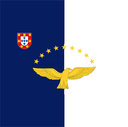
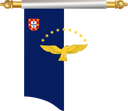
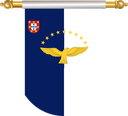
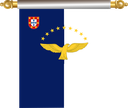
The flag of the Azores features a vertical bicolor design divided into blue and white. The blue stripe appears on the hoist side, while the white stripe occupies the fly side. Centered on the flag is a golden nine-pointed star placed on the white section.
The design is clean and symmetrical, making the star the central focus. The contrast between the blue and white background ensures high visibility, while the star stands out clearly. This simple yet meaningful layout makes the Azores flag easily recognizable among regional flags.
Meaning of Colors and Symbols
Each element of the Azores flag carries symbolic meaning. The blue color represents the Atlantic Ocean that surrounds the islands and defines their geography, economy, and culture. Blue also symbolizes peace, stability, and loyalty.
The white color symbolizes purity, peace, and unity. It reflects harmony among the islands and the desire for cooperation within the region. The golden nine-pointed star is the most important symbol on the flag. Each point represents one of the nine islands that make up the Azores archipelago.
The star also symbolizes autonomy and regional unity. Its golden color represents prosperity, hope, and the importance of the Azores within Portugal and the wider Atlantic world.
Historical Background of the Azores Flag
The current flag of the Azores was officially adopted in 1979, following the establishment of political autonomy for the region. The design was created to visually represent the Azores as a unified region while maintaining its connection to Portugal.
Before autonomy, the Azores did not have a distinct regional flag. The adoption of the flag marked an important milestone in self-governance and regional recognition. Readers interested in the political development of the islands can explore further details on the History of the Azores page.
Autonomy and Regional Identity
The flag of the Azores plays a key role in expressing regional autonomy. While the Azores remain part of Portugal, they have their own regional government and legislative powers. The flag represents this balance between self-rule and national unity.
For residents of the islands, the flag symbolizes shared identity across geographically separated islands. It reinforces the idea that despite distance, the islands function as a single cultural and political community.
Relationship to the Flag of Portugal
The Azores flag is often displayed alongside the flag of Portugal, especially during official ceremonies and public events. While Portugal’s national flag represents sovereignty, the Azores flag highlights regional autonomy and local identity.
The use of different colors and symbols ensures that the Azores flag is clearly distinct while remaining respectful of national symbolism. This relationship reflects the cooperative political structure between the region and the Portuguese state.
Modern Use of the Flag of the Azores
Today, the flag of the Azores is flown on government buildings, regional institutions, and during public celebrations. It is commonly seen during regional holidays, cultural festivals, and official gatherings.
The flag is also used in tourism promotion and educational materials to represent the islands internationally. Its continued use strengthens recognition of the Azores as a distinct region with its own identity and governance.
Interesting Facts About the Flag of the Azores
- The flag was officially adopted in 1979.
- It represents an autonomous region of Portugal.
- The nine-pointed star symbolizes the nine islands.
- Blue represents the Atlantic Ocean.
- The flag reflects unity across geographically separate islands.
Frequently Asked Questions
What does the star on the Azores flag represent?
The star represents the nine islands that make up the Azores archipelago.
Is the Azores flag a national flag?
No, it is a regional flag of an autonomous region of Portugal.
When was the flag of the Azores adopted?
The flag was adopted in 1979.
Why are blue and white used on the Azores flag?
Blue represents the Atlantic Ocean, while white symbolizes peace and unity.
Where is the Azores flag commonly displayed?
It is flown on regional government buildings and during public events.