What Does the Official Anguilla Flag Look Like?
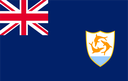
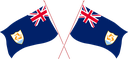
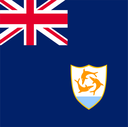
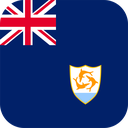
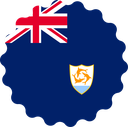
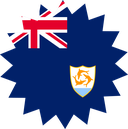
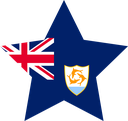
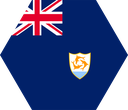
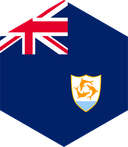
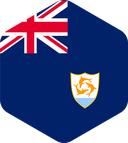
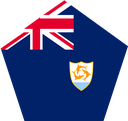
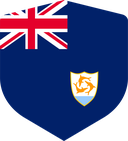
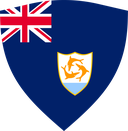
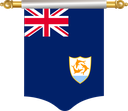
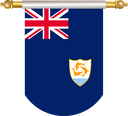
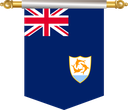
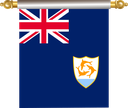
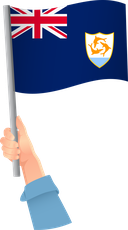
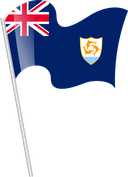
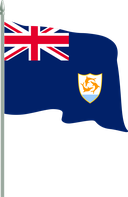
The official flag design has dark blue color background. The Union Flag also appears in the upper left corner, while Anguilla’s coat of arms is also displayed on the right side.
The shield may also contains three orange dolphins may arranged in a circle alongside a white background. A turquoise blue section also appears lower them. The present Anguilla flag design was officially introduced in 1990, conjoining British and local symbols within one familiar design.
The historic Three Dolphins sign Flag is also important to many Anguillans. While, it is not the official national flag, it also remains a strong symbol of local identity and the island’s political brawl.
Meaning of the Flag of Anguilla
Each feature of the flag of Anguilla also carries a superior meaning. The three orange dolphin’s sign may signify power, unity, and strength. Their circular position also reflects stability and the close association shared by the island’s people.
The white color background also represents peace and quietness. Turquoise blue color also signifies the Caribbean Sea surrounding Anguilla. It is also associated with its youth, hope, and faith.
The Union Flag also represents Anguilla’s legal relationship with the United Kingdom. Together, these essentials make the design, a meaningful expression of history, popular political identity, and community superiority.
Anguilla History and Flag Development
Anguilla history played an important role in shaping its flags. Before 1967, the British Union Flag also commonly used on this island.
During the Anguillan Revolution, residents faced has being ruled as part of the associated state of Saint Kitts and Nevis. A mermaid flag appeared briefly before the famous Three Dolphins Flag became popular.
Anguilla became a separate British dependent territory in 1980. The current Anguilla flag was approved in 1990, stabilizing the dolphin sign emblem, while diagnosing the island’s connection with Britain region.
Where Is Anguilla Located in Region?
People regularly ask, where is Anguilla located? Basically Anguilla is situated in the eastern Caribbean Sea side. It lies on north of Saint Martin and east of Puerto Rico.
The island is also a part of the Leeward Islands inside the Lesser Antilles. Its warm weather, some white sand beaches, and pure water can make it a popular Caribbean destination to view.
Capital and Anguilla Language
The Valley, capital of Anguilla, is the island’s National governmental and commercial Centre. It also contains government offices, personal businesses, schools, and important public institution services.
English is the official Anguilla language. It is commonly used in education Services, government Institutes, tourism tour, in business, media Centre’s, and daily discussions throughout the territory.
Anguilla Flag Emoji
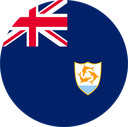
The official Anguilla flag emoji is commonly used in traveling posts, country maps, social media captions, and geographical content. Its appearance may also differ slightly across devices.
Questions about Country: Anguilla?
Where is Anguilla Officially located?
Anguilla is also located on eastern Caribbean Sea side, north side of Saint Martin and east are of Puerto Rico. It also forms a part of the Leeward Islands.
Is Anguilla a country or State?
Anguilla is not also an independent country. It is a self-governing British Overseas Territory with its own selected government and legal relations to Britain.
What official language do they speak in Anguilla?
English is the official Anguilla language. It is widely spoken in all schools, government offices, industries, tourist locations, and daily communication.
What is the capital of Anguilla?
The Valley, capital of Anguilla, is the territory’s governmental and commercial Centre, officially containing government offices, businesses works, schools, and essential public services.
What does the flag of Anguilla represent?
The dolphins represent endurance, unity, and strength. White represents peace, while turquoise reflects the Caribbean Sea, faith, youth, and hope