Design of the Flag of Hawaii
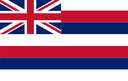
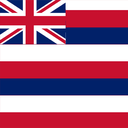
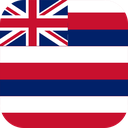
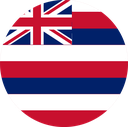
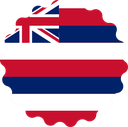
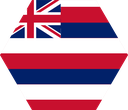
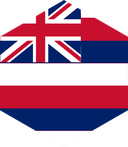
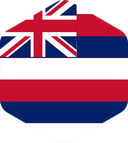
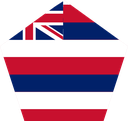
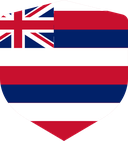
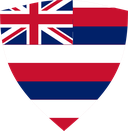
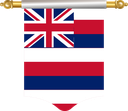
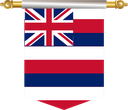
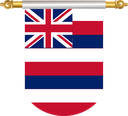
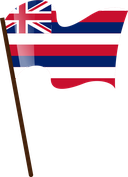
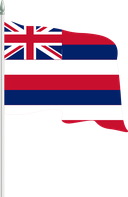
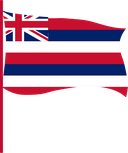
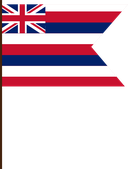
The Flag of Hawaii features eight horizontal stripes of equal width, alternating between white, red, and blue. In the upper hoist-side corner is the Union Jack, the national flag of the United Kingdom.
The eight stripes run across the entire length of the flag, creating a balanced and recognizable pattern. The combination of stripes and the Union Jack makes Hawaii’s flag visually distinct from all other U.S. state flags.
Meaning of Colors and Symbols
Each element of the Flag of Hawaii carries historical and cultural meaning.
The eight horizontal stripes represent the eight main Hawaiian Islands: Hawaiʻi, Maui, Kahoʻolawe, Lānaʻi, Molokaʻi, Oʻahu, Kauaʻi, and Niʻihau. Together, they symbolize unity among the islands.
The colors red, white, and blue reflect Western influence and political alliances. They also represent loyalty, courage, and purity.
The Union Jack symbolizes historical ties between the Hawaiian Kingdom and Great Britain. It reflects a period when Hawaii maintained diplomatic relationships with major global powers while remaining independent.
Historical Background of the Hawaii Flag
The origins of the Flag of Hawaii date back to the early 19th century, during the reign of King Kamehameha I. The design emerged as Hawaii sought to maintain neutrality between powerful foreign nations.
The Union Jack was included to honor friendly relations with Britain, while the striped field reflected Hawaiian identity. The flag continued to be used throughout the Hawaiian Kingdom, the Republic of Hawaii, and later the Territory of Hawaii.
When Hawaii became the 50th U.S. state in 1959, the flag was officially retained as the state flag. Readers interested in this transformation can explore more context on the History of Hawaii page.
Cultural and State Significance
The Flag of Hawaii holds deep cultural and emotional significance for residents. It represents sovereignty, island unity, and the legacy of the Hawaiian monarchy.
The flag is prominently displayed during state holidays, cultural festivals, and public ceremonies. For Native Hawaiians and long-time residents, it symbolizes heritage, resilience, and identity.
Relationship to the United States Flag
Hawaii is the only U.S. state whose flag includes a foreign national symbol. Despite this, the Flag of Hawaii coexists respectfully with the Flag of the United States, which represents federal authority and national unity.
The Hawaiian flag emphasizes state identity and historical uniqueness rather than political separation. It highlights Hawaii’s distinct path to becoming part of the United States.
Relationship to Other U.S. State Flags
Most U.S. state flags feature seals or coats of arms. The Flag of Hawaii stands out for its simple striped design and absence of a state seal.
Its inclusion of the Union Jack makes it the only state flag with a direct reference to a foreign nation, further emphasizing Hawaii’s exceptional history among U.S. states.
Modern Use of the Flag of Hawaii
Today, the Flag of Hawaii is flown on government buildings, schools, beaches, and public spaces throughout the islands. It is also displayed during sporting events and international cultural showcases representing Hawaii.
The flag plays an important role in education and cultural awareness, helping people understand Hawaiian history, diplomacy, and identity. Its continued use reinforces Hawaii’s unique place within the United States.
Interesting Facts About the Flag of Hawaii
- It is the only U.S. state flag with a foreign symbol.
- The stripes represent the eight main islands.
- The design dates back to the Hawaiian Kingdom.
- It was retained after statehood in 1959.
- The Union Jack reflects diplomatic history.
Frequently Asked Questions
Why does the Hawaii flag include the Union Jack?
It represents historical ties between Hawaii and Great Britain.
What do the stripes on the Hawaii flag represent?
They represent the eight main Hawaiian Islands.
When was the Flag of Hawaii officially adopted?
It was officially retained as the state flag in 1959.
Is Hawaii the only U.S. state with a foreign symbol on its flag?
Yes, it is unique in this regard.
Where is the Hawaii flag commonly displayed?
It is flown on public buildings and during state events.