Design of the Flag of Transnistria
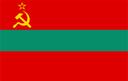
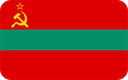
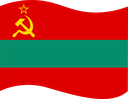
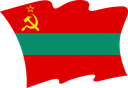
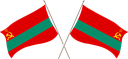
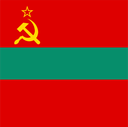
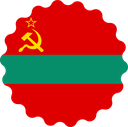
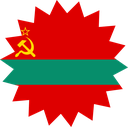
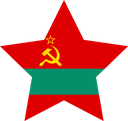
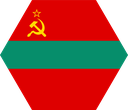
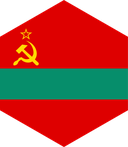
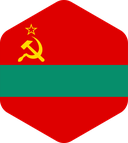
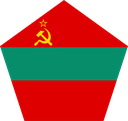
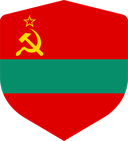
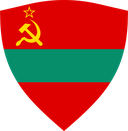
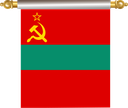
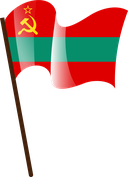
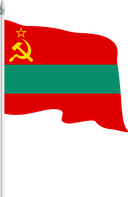
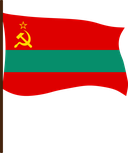
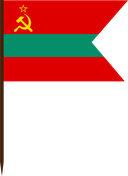
The Flag of Transnistria consists of three horizontal stripes:
- Red stripe at the top
- Green stripe in the middle
- Red stripe at the bottom
In the upper hoist corner, placed on the top red stripe, is a gold hammer and sickle with a gold star above it.
The design is bold and immediately recognizable due to its Soviet symbolism.
Meaning of Colors and Symbols
Each element of the Flag of Transnistria carries strong ideological and historical meaning.
The red color represents revolution, struggle, and socialist heritage. It reflects continuity with Soviet political symbolism.
The green stripe represents agriculture, fertility, and the land of the Dniester River region. It also symbolizes hope and regional prosperity.
The hammer and sickle represent unity between industrial workers and agricultural laborers, a core symbol of communism.
The gold star represents socialism and ideological guidance, symbolizing authority and political direction.
Together, these elements emphasize political ideology, regional identity, and historical continuity.
Historical Background of the Transnistria Flag
Transnistria declared independence from Moldova in 1990, following tensions during the collapse of the Soviet Union.
After a brief armed conflict in 1992, Transnistria established de facto control over the region, though it remains internationally recognized as part of Moldova.
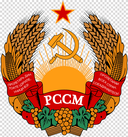
The flag was adopted to closely resemble the flag of the Moldavian Soviet Socialist Republic, reflecting resistance to post-Soviet political changes and alignment with Soviet legacy.
Readers interested in post-Soviet conflicts can explore more context on the History of Transnistria page.
Political and Regional Significance
The Flag of Transnistria holds strong political significance rather than purely cultural symbolism.
It represents resistance to Moldovan governance and a desire to preserve Soviet-era identity. For supporters of the region’s administration, the flag symbolizes stability, autonomy, and ideological continuity.
For critics, it represents unresolved conflict and frozen political status.
Despite differing interpretations, the flag remains a central symbol of Transnistrian governance.
Relationship to Other Soviet-Style Flags
The Flag of Transnistria is one of the few modern flags still displaying hammer and sickle symbolism.
It shares visual similarities with historic Soviet republic flags but is unique in continued official use. Comparing post-Soviet flags highlights Transnistria’s strong attachment to Soviet political imagery.
This makes the flag unusual in modern Europe.
Modern Use of the Flag of Transnistria
Today, the Flag of Transnistria is flown on government buildings, military facilities, schools, and public institutions within the region.
It is used during official ceremonies, political events, and state functions. While not widely recognized internationally, the flag functions as the primary symbol of authority within Transnistria.
The flag plays an important role in civic identity and political expression within the region.
Interesting Facts About the Flag of Transnistria
- It resembles a Soviet-era flag.
- It includes a hammer and sickle.
- It represents a disputed territory.
- It was adopted after 1990.
- It is rarely seen outside the region.
Questions About the Flag of Transnistria
Is Transnistria an independent country?
No, it is a self-declared state with limited recognition.
Why does the Transnistria flag include a hammer and sickle?
It reflects Soviet heritage and political ideology.
When was the Flag of Transnistria adopted?
It was adopted in the early 1990s.
What do the colors of the Transnistria flag represent?
Red represents socialism, and green represents land and agriculture.
Where is the Transnistria flag commonly displayed?
On government buildings and official institutions within the region.