Design of the Flag of Andorra
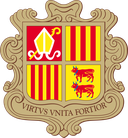
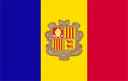
The flag of Andorra features three vertical stripes in blue, yellow, and red, arranged from left to right. At the center of the yellow stripe is the national coat of arms of Andorra, which distinguishes the flag from similar tricolors.
The vertical tricolor format gives the flag a strong and formal appearance. The central coat of arms adds complexity and authority to the design, making the Andorra flag instantly recognizable. Without the coat of arms, the flag would closely resemble other European tricolors, so the emblem plays a key role in its uniqueness.
Meaning of Colors and Symbols
Each color on the Andorra flag has symbolic meaning. The blue stripe represents freedom, stability, and Andorra’s historical ties with France. Blue is also associated with peace and loyalty.
The yellow stripe symbolizes prosperity, balance, and independence. It reflects Andorra’s long-standing ability to maintain self-rule despite its small size. The red stripe represents strength, courage, and the country’s relationship with Spain, highlighting shared cultural and historical influences.
The coat of arms at the center is divided into four sections, representing Andorra’s historical protectors and institutions. These include symbols linked to France, Spain, and local authority. Together, they emphasize Andorra’s unique political system, which is based on shared leadership and cooperation.
Historical Background of the Andorra Flag
The origins of the Andorra flag date back to the 19th century, when the tricolor design was introduced to reflect national identity. The current version, featuring the coat of arms, was officially adopted later to strengthen its distinction from other flags.
Andorra’s political system, known as a co-principality, influenced the symbolism of the flag. The inclusion of elements connected to both France and Spain reflects centuries of shared governance. For readers interested in how this system developed over time, additional details are available on the History of Andorra page.
Political and Cultural Significance
The flag of Andorra holds strong political and cultural importance. It represents Andorra’s sovereignty, despite being one of Europe’s smallest countries. The flag is commonly displayed on government buildings, during national celebrations, and at official ceremonies.
Culturally, the flag symbolizes unity and continuity. It reflects how Andorra has maintained its traditions, language, and institutions while adapting to modern Europe. For citizens, the flag is a reminder of independence achieved through diplomacy rather than conflict.
Relationship to Other European Flags
The Andorra flag shares its tricolor layout with several European flags, particularly those of neighboring countries. However, the inclusion of the coat of arms clearly sets it apart. This design choice highlights Andorra’s desire to express individuality while acknowledging regional connections.
Visitors interested in European flags may also explore designs such as the flag of France or the flag of Spain, which help explain the historical influences visible in Andorra’s national symbols.
Modern Use of the Flag of Andorra
Today, the flag of Andorra is used in both official and public settings. It is flown at government offices, schools, and public institutions. During national events and international gatherings, the flag represents Andorra on the global stage.
The flag is also widely used in tourism promotion, reflecting Andorra’s identity as a peaceful, independent country known for its mountain landscape and cultural heritage. Its continued use reinforces national pride and international recognition.
Interesting Facts About the Flag of Andorra
- The flag features a vertical blue, yellow, and red tricolor.
- The coat of arms makes it unique among similar flags.
- Andorra’s flag reflects shared governance with France and Spain.
- The design emphasizes independence through cooperation.
- It is one of the most distinctive flags among European microstates.
Frequently Asked Questions
What do the colors of the Andorra flag represent?
Blue represents stability, yellow symbolizes prosperity, and red stands for strength and courage.
Why does the Andorra flag include a coat of arms?
The coat of arms highlights Andorra’s unique political system and historical protectors.
When was the flag of Andorra adopted?
The tricolor design dates to the 19th century, with the modern version adopted later.
Is Andorra an independent country?
Yes, Andorra is a fully independent country with a unique co-principality system.
Where is the Andorra flag commonly displayed?
It is flown on government buildings, schools, and during national events.