Design of the Flag of Pennsylvania
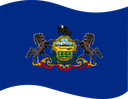
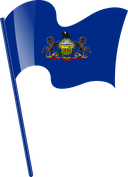
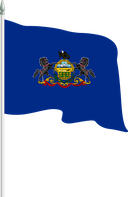
The flag of Pennsylvania features a dark blue field with the state coat of arms prominently displayed at the center. The coat of arms is detailed and formal, reflecting traditional heraldic design.
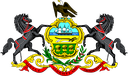
At the top of the emblem is a bald eagle, standing with wings partially spread. Below the eagle is a shield divided into sections showing symbolic images. Supporting the shield on both sides are two black horses, standing upright.
A ribbon beneath the shield displays the state motto: “Virtue, Liberty, and Independence.”
The design is symmetrical and dignified, emphasizing Pennsylvania’s authority and historical importance.
Meaning of the Colors and Symbols
Each element on the Pennsylvania flag carries specific meaning tied to the state’s identity.
The blue background symbolizes loyalty, justice, and perseverance. Blue is commonly used in American state flags to reflect stability and unity.
The bald eagle represents strength, vigilance, and sovereignty. As the national bird of the United States, it emphasizes Pennsylvania’s importance in the nation’s founding.
The shield features three main symbols:
- A ship, representing commerce and trade
- A plow, symbolizing agriculture and hard work
- Three sheaves of wheat, representing abundance and prosperity
The two black horses symbolize strength, dignity, and cooperation.
The state motto, “Virtue, Liberty, and Independence,” reflects Pennsylvania’s guiding principles and its historic role in promoting freedom and democratic values.
Historical Background and Adoption
Pennsylvania was one of the original thirteen colonies and played a central role in the American Revolution. Both the Declaration of Independence and the United States Constitution were debated and signed in Pennsylvania.
The elements of the state coat of arms date back to the late 18th century. However, the current state flag was officially adopted on June 13, 1907, when the blue field and centered coat of arms were standardized.
The flag was designed to reflect Pennsylvania’s economic strength and political importance. More historical context can be found on the history of Pennsylvania page.
Cultural and State Significance
The Pennsylvania flag holds strong cultural importance and is widely displayed during state holidays, official ceremonies, and civic events.
It represents Pennsylvania’s identity as a center of industry, agriculture, and democratic thought. The flag is commonly seen at government buildings, schools, and public institutions.
Among U.S. state flags, Pennsylvania’s design is often compared with the Flag of New York and the Flag of New Jersey, which also feature state coats of arms on blue backgrounds.
Despite its formal design, the flag remains a respected and recognizable symbol of state authority.
Official Use and Flag Etiquette
The flag of Pennsylvania is flown at the State Capitol in Harrisburg, government offices, courts, and educational institutions. It is typically displayed alongside the Flag of the United States.
Respectful handling of the flag is encouraged. It should be kept clean, displayed properly, and treated as a symbol of state pride and governance.
During official events and memorials, the flag may be raised or lowered according to established protocol.
The Flag in Modern Pennsylvania
In modern Pennsylvania, the flag continues to symbolize tradition, responsibility, and civic pride. It appears in state branding, official documents, and public ceremonies.
While some discussions exist about modernizing state flags, Pennsylvania’s flag remains unchanged, valued for its historical symbolism and formal appearance.
The flag continues to educate residents and visitors about the state’s economic and political heritage.
Design Strength and Recognition
The Pennsylvania flag is recognized for its detailed symbolism and historical depth. While more complex than minimalist designs, it communicates authority and tradition effectively.
The use of heraldic elements connects the state to classical governance symbols, reinforcing its importance in American history.
Its consistent design ensures strong recognition within official and educational settings.
Questions About the Flag of Pennsylvania
When was the flag of Pennsylvania adopted?
The flag was officially adopted on June 13, 1907.
What does the eagle on the flag represent?
It represents strength, vigilance, and national unity.
What do the symbols on the shield mean?
They represent commerce, agriculture, and prosperity.
What is Pennsylvania’s state motto?
“Virtue, Liberty, and Independence.”
Is the Pennsylvania flag the same on both sides?
Yes, the design appears on both sides of the flag.