Design of the Flag of Mongolia
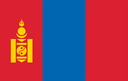
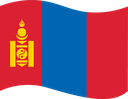
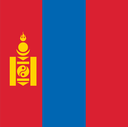
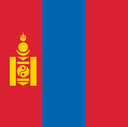
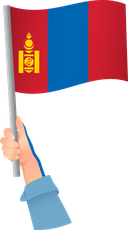
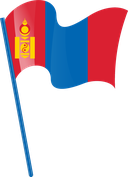
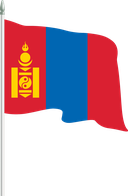
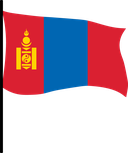
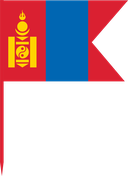
The flag of Mongolia features three vertical stripes of equal width. The left and right stripes are red, while the central stripe is blue. On the red stripe nearest the hoist side appears the Soyombo symbol, a traditional Mongolian emblem.
The layout is simple yet distinctive. The vertical arrangement gives the flag a strong and upright appearance, while the Soyombo symbol adds deep cultural meaning that clearly distinguishes Mongolia’s flag from other tricolor designs.
Meaning of the Colors and Symbols
Each color and symbol on the Mongolian flag carries rich meaning. The red stripes represent strength, bravery, and the endurance of the Mongolian people. Red is also associated with prosperity and progress.
The blue stripe symbolizes the Eternal Blue Sky, a concept deeply rooted in Mongolian culture and spirituality. It reflects freedom, peace, and the vast open skies of the Mongolian steppe.
The Soyombo symbol is the most important element of the flag. It consists of several shapes stacked vertically, each with its own meaning. The flame at the top represents growth, prosperity, and the continuity of the nation through past, present, and future. The sun and moon symbolize eternity and the Mongolian people’s historical roots. Other elements within the symbol represent strength, balance, and unity.
Together, these elements express Mongolia’s independence, cultural pride, and determination to endure as a nation.
Historical Background and Adoption
Mongolia’s flag has evolved alongside the country’s political history. Earlier versions included socialist symbols during the 20th century, reflecting Mongolia’s political alignment at the time.
Following democratic reforms and the adoption of a new constitution, Mongolia updated its national symbols. The current version of the flag was officially adopted on February 12, 1992, removing earlier ideological elements while preserving traditional symbolism. This change marked a new era in Mongolia’s national identity. More historical context can be found on the history of Mongolia page.
Cultural and National Significance
The Mongolian flag holds deep cultural significance and is closely connected to national pride. It is displayed during national holidays, traditional festivals, and official ceremonies. The Soyombo symbol, in particular, is widely used beyond the flag, appearing in art, architecture, and cultural expressions across the country.
Among Asian flags, Mongolia’s design stands out due to its strong symbolic depth. It is often compared with the Flag of Kazakhstan and the Flag of Kyrgyzstan, though Mongolia’s use of the Soyombo makes it uniquely identifiable.
Official Use and Flag Etiquette
The flag of Mongolia is flown at government buildings, schools, embassies, and public institutions. It is also used during diplomatic events and international gatherings to represent Mongolia abroad.
Respectful handling of the flag is encouraged. During official ceremonies, the flag is raised and lowered with formality, reflecting its importance as a national symbol.
The Flag in Modern Mongolia
In modern Mongolia, the flag represents both tradition and progress. It is commonly seen at sporting events, cultural exhibitions, and international competitions. For many citizens, the flag symbolizes national unity and pride in Mongolia’s unique heritage.
The continued use of the Soyombo symbol ensures that Mongolia’s ancient identity remains central to its modern statehood.
Questions About the Flag of Mongolia
When was the current flag of Mongolia adopted?
The current version of the flag was adopted on February 12, 1992.
What does the Soyombo symbol represent?
It represents freedom, independence, strength, and the continuity of the Mongolian nation.
Why is blue important on the Mongolian flag?
Blue symbolizes the Eternal Blue Sky and freedom.
What do the red stripes stand for?
They represent strength, bravery, and prosperity.
Is the Mongolian flag the same on both sides?
Yes, the design appears on both sides of the flag.