Design of the Flag of New Jersey
The flag of New Jersey features a buff-colored field, which is a light yellow or tan shade. At the center of the flag is the New Jersey state coat of arms, displayed prominently.
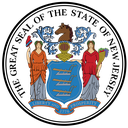
The coat of arms shows a shield supported by two female figures, Liberty and Ceres. Above the shield is a horse’s head crest, and below it is a banner bearing the state motto. The shield itself contains three plows, symbolizing agriculture and land cultivation.
The overall design is formal and balanced, with all elements arranged symmetrically to emphasize tradition and clarity.
Meaning of the Colors and Symbols
The buff color of the flag has historical significance. It was one of the colors used by New Jersey regiments during the Revolutionary War and symbolizes the state’s military heritage and early struggle for independence.
The three plows on the shield represent agriculture, highlighting New Jersey’s historical reliance on farming and its fertile land.
The figure of Liberty symbolizes freedom and self-determination. She holds a staff topped with a liberty cap, a symbol commonly associated with independence movements.
The figure of Ceres, the Roman goddess of agriculture, represents abundance, prosperity, and the importance of farming to the state’s economy.
The horse’s head crest symbolizes speed, strength, and progress. The horse has long been associated with New Jersey’s identity and is also the state animal.
The state motto, “Liberty and Prosperity,” reflects the values New Jersey seeks to uphold.
Historical Background and Adoption
New Jersey was one of the original thirteen colonies and played a significant role during the American Revolution, earning the nickname “The Crossroads of the Revolution.”
The state adopted its current flag design in 1896, based on the state coat of arms that had been in use since 1777. The choice of buff and blue colors was inspired by the uniforms worn by New Jersey soldiers during the Revolutionary War.
More historical context can be found on the history of New Jersey page, which explains the state’s early development and political importance.
Cultural and State Significance
The New Jersey flag is used primarily in official and governmental contexts. It represents state authority, public institutions, and civic pride rather than decorative display.
Among U.S. state flags, New Jersey’s buff background makes it visually distinct. It is often compared with the Flag of New York and the Flag of Pennsylvania, which also feature heraldic elements and early American symbolism.
The flag is commonly displayed during state holidays, official ceremonies, and public events.
Official Use and Flag Etiquette
The flag of New Jersey is flown at the State Capitol, courthouses, schools, and municipal buildings. It is typically displayed alongside the Flag of the United States during official functions.
Guidelines encourage respectful handling of the flag. It should be raised and lowered according to protocol and kept clean and undamaged as a sign of respect.
Design Tradition and Recognition
The New Jersey flag is valued for its traditional design and strong historical references. Its use of classical symbolism connects the modern state to its colonial roots and founding principles.
Although discussions occasionally arise about modernizing state flags, New Jersey’s design remains unchanged and widely recognized as an official symbol of state identity.
The Flag as a Reflection of New Jersey’s Values
The imagery and motto on the New Jersey flag emphasize balance between freedom and economic growth. Liberty and prosperity are presented as complementary ideals rather than opposing forces.
For residents, the flag serves as a reminder of New Jersey’s role in American independence and its continued commitment to progress and opportunity.
Questions About the Flag of New Jersey
When was the flag of New Jersey adopted?
The flag was officially adopted in 1896.
Why is the New Jersey flag buff-colored?
Buff was a color used by New Jersey troops during the Revolutionary War.
What do the three plows represent?
They represent agriculture and farming heritage.
Who are the figures on the flag?
They are Liberty and Ceres, symbolizing freedom and prosperity.
Is the New Jersey flag the same on both sides?
Yes, the design appears on both sides of the flag.