Design of the Flag of the Sahrawi Arab Democratic Republic
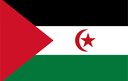
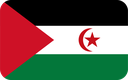
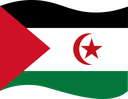
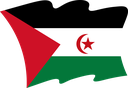
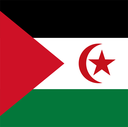
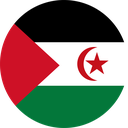
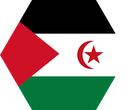
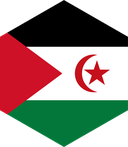
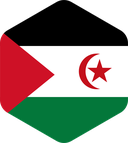
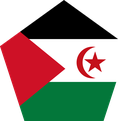
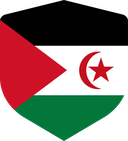
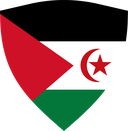
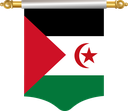
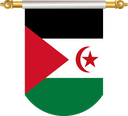
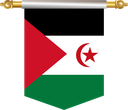
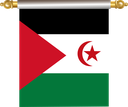
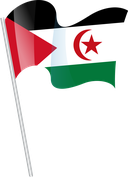
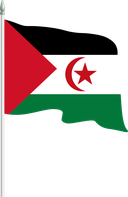
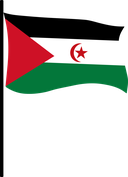
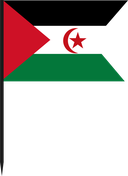
The flag of the Sahrawi Arab Democratic Republic consists of three horizontal stripes of equal width:
- Black on the top
- White in the middle
- Green on the bottom
On the hoist side is a red triangle pointing toward the center of the flag. Within the white stripe, near the hoist, appear a red crescent and a red star.
The overall design closely resembles several Arab liberation flags, emphasizing shared heritage and unity across the Arab world.
Meaning of the Colors and Symbols
Each color and symbol on the Sahrawi flag carries strong political and cultural meaning.
The black stripe represents the hardships of the past and the difficult history of colonization and displacement.
The white stripe symbolizes peace and hope, reflecting the desire for a just and peaceful resolution to the conflict.
The green stripe represents prosperity, land, and the future, as well as the connection to Arab and Islamic heritage.
The red triangle symbolizes struggle, sacrifice, and resistance in the pursuit of self-determination.
The red crescent and star are traditional Islamic symbols representing faith, unity, and guidance.
Together, these elements express resilience, identity, and national aspiration.
Historical Background and Adoption
Western Sahara was formerly a Spanish colony known as Spanish Sahara. When Spain withdrew in 1975, control of the territory became contested, leading to conflict involving neighboring countries and the Sahrawi independence movement.
The Polisario Front, representing the Sahrawi people, proclaimed the Sahrawi Arab Democratic Republic in 1976. The flag was adopted as the national symbol of the newly declared republic.
Since then, the flag has been used in Sahrawi refugee camps, diplomatic missions, and international forums. More historical context can be found on the history of Western Sahara page.
Political and International Context
The Sahrawi Arab Democratic Republic is recognized by a number of countries and is a member of the African Union, but it is not universally recognized by the international community.
Despite this, the flag remains a central symbol of Sahrawi identity and political expression. It is often displayed during demonstrations, international solidarity events, and official SADR functions.
The flag’s design aligns with other Pan-Arab flags, such as the Flag of Palestine and the Flag of Jordan, reinforcing shared cultural roots.
Cultural and National Significance
For the Sahrawi people, the flag represents more than political authority; it symbolizes identity, endurance, and hope.
It is prominently displayed in refugee camps in Algeria, where many Sahrawis have lived for decades, as well as in cultural events, schools, and community gatherings.
The flag plays an important role in preserving national identity among displaced populations.
Official Use and Flag Etiquette
The Sahrawi flag is used by the SADR government-in-exile, diplomatic missions, and at African Union events.
Within refugee camps and Sahrawi-controlled areas, the flag is treated with respect as a symbol of unity and resistance.
There are no universally enforced international protocols for its display, but within Sahrawi communities, respectful handling is strongly emphasized.
The Flag in Modern Sahrawi Society
In modern Sahrawi society, the flag continues to represent determination and resilience. It appears in media, cultural expression, and international advocacy.
For younger generations, the flag is a symbol of identity and connection to homeland, even for those born outside Western Sahara.
Its continued use reflects the ongoing nature of the Sahrawi struggle for recognition and self-determination.
Design Strength and Recognition
The Sahrawi flag is visually powerful due to its bold colors and familiar Pan-Arab design. This allows it to be instantly associated with regional liberation movements.
The inclusion of the crescent and star adds cultural depth while maintaining simplicity.
Its symbolism ensures strong recognition among political activists and international observers.
Questions About the Flag of the Sahrawi Arab Democratic Republic
When was the Sahrawi flag adopted?
It was adopted in 1976 following the declaration of the SADR.
What do the colors of the Sahrawi flag represent?
They represent struggle, peace, prosperity, and hope.
Is the Sahrawi flag internationally recognized?
It is recognized by some countries and the African Union.
What does the crescent and star symbolize?
They represent Islamic faith and unity.
Is Western Sahara an independent country?
Its status is disputed, and independence is not universally recognized.