Design of the Flag of Niue
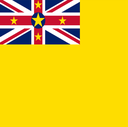
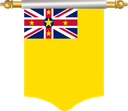
The flag of Niue features a bright yellow field, making it one of the few national flags to use yellow as the dominant background color. In the upper hoist corner appears a modified Union Jack, which contains additional symbols unique to Niue.
At the center of the Union Jack is a blue disk with a yellow five-pointed star, surrounded by four smaller yellow stars. These stars are arranged symmetrically within the British flag element, creating a distinctive and layered design.
The bold yellow background contrasts strongly with the blue and red elements of the Union Jack, ensuring high visibility and instant recognition.
Meaning of the Colors and Symbols
Each element of the Niue flag carries clear symbolic meaning.
The yellow background represents sunshine, warmth, and the friendliness of the Niuean people. It also symbolizes optimism and the bright future of the island nation.
The Union Jack reflects Niue’s historical ties to the United Kingdom and its constitutional relationship with New Zealand, which itself retains the British monarch as head of state.
The blue disk symbolizes the Pacific Ocean that surrounds Niue, highlighting the island’s geographic isolation and maritime identity.
The five yellow stars represent Niue’s unity and connection to New Zealand. The central star symbolizes Niue itself, while the four surrounding stars are often interpreted as representing the island’s relationship with the wider world and its community structure.
Together, these elements emphasize loyalty, cooperation, and independence within partnership.
Historical Background and Adoption
Niue has a long history shaped by Polynesian settlement and later European contact. In the 19th century, the island came under British influence before being transferred to New Zealand administration.
Niue became self-governing in free association with New Zealand in 1974, gaining control over its internal affairs while New Zealand retained responsibility for defense and foreign relations.
The flag of Niue was officially adopted on October 15, 1975, making it one of the few national flags to prominently feature the Union Jack on a non-blue background. More historical context can be found on the history of Niue page.
Political and National Significance
The Niue flag clearly represents the island’s unique political status. Unlike fully independent states or traditional colonies, Niue’s flag expresses partnership rather than subordination.
The use of the Union Jack alongside local symbolism visually communicates Niue’s self-governance while acknowledging its constitutional ties to New Zealand.
Among Pacific island flags, Niue’s design is often compared with the Flag of New Zealand and the Flag of the Cook Islands, though Niue’s yellow field makes it especially distinctive.
Cultural Importance and Identity
For Niueans, the flag is a symbol of pride, resilience, and identity. It is displayed during national celebrations, cultural festivals, and official ceremonies.
The flag reinforces a sense of belonging among Niueans living both on the island and abroad, especially in New Zealand, where a large Niuean community resides.
Despite its small population, Niue maintains a strong national identity, and the flag plays a central role in expressing that identity visually.
Official Use and Flag Etiquette
The flag of Niue is flown at government buildings, schools, and public institutions across the island. It is also used during international representation where Niue participates independently.
Respectful handling of the flag is encouraged. It is often flown alongside the Flag of New Zealand, particularly during joint events and official visits.
The bright yellow field makes the flag highly visible and well-suited to outdoor display in Niue’s tropical environment.
The Flag in Modern Niue
In modern Niue, the flag symbolizes continuity, partnership, and self-determination. It appears in cultural promotions, tourism materials, and international forums.
The flag’s design reflects Niue’s ability to maintain autonomy while benefiting from close international relationships. This balance is central to the island’s political and cultural identity.
Design Uniqueness and Recognition
The Niue flag is widely recognized for its unusual color choice and modified Union Jack. It stands out among world flags and is often cited as an example of creative adaptation of traditional symbols.
Its clarity, symbolism, and bright appearance ensure lasting recognition and relevance.
Questions About the Flag of Niue
When was the flag of Niue adopted?
The flag was adopted on October 15, 1975.
Why does the Niue flag include the Union Jack?
It reflects Niue’s historical and constitutional ties with New Zealand and the British Crown.
What does the yellow background represent?
It symbolizes sunshine, warmth, and the friendliness of the Niuean people.
What do the stars on the flag represent?
They represent Niue’s unity and its relationship with the wider world.
Is the Niue flag the same on both sides?
Yes, the design appears on both sides of the flag.