Design of the Flag of Turkey
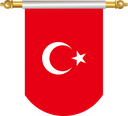
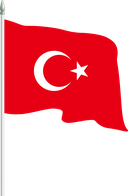
The Flag of Turkey features a red field with a white crescent and a white five-pointed star positioned slightly to the left of center.
The crescent opens toward the star, creating a balanced and harmonious composition. The proportions and placement of the symbols are strictly defined by Turkish law to ensure uniformity in official use.
The overall design is clean, bold, and instantly recognizable.
Meaning of Colors and Symbols
Each element of the Flag of Turkey carries strong symbolic meaning.
The red background represents the blood shed by soldiers and citizens who sacrificed their lives for the nation. It symbolizes bravery, strength, and independence.
The white crescent is commonly associated with Islam and has been used as a symbol in Anatolia long before the Ottoman period. It represents faith, hope, and continuity.
The white star symbolizes guidance, sovereignty, and the unity of the Turkish nation. Its five points are often associated with ideals such as independence and national integrity.
Together, these elements express sacrifice, faith, and national unity.
Historical Background of the Turkey Flag
The origins of the Flag of Turkey date back to the Ottoman Empire, where variations of the crescent and star were used on military banners.
According to tradition, the crescent and star were inspired by a reflection in pools of blood after a historic battle, symbolizing sacrifice and victory.
The modern version of the flag was officially standardized in 1936, after the founding of the Republic of Turkey in 1923 under Mustafa Kemal Atatürk.
The flag preserved Ottoman symbolism while representing a modern, secular nation-state.
Readers interested in imperial and republican transitions can explore more context on the History of Turkey page.
Cultural and National Significance
The Flag of Turkey holds deep emotional and cultural importance for Turkish people. It is regarded as a sacred symbol of national identity and independence.
The flag is prominently displayed during national holidays, military ceremonies, public events, and commemorations. It is also commonly seen on homes, businesses, and public spaces.
Strict laws protect the dignity of the Turkish flag, reflecting the respect and honor associated with it.
Relationship to Other Crescent Flags
The Flag of Turkey shares the crescent and star symbolism with several other national flags, such as Tunisia and Pakistan.
However, Turkey’s flag is unique in its historical continuity and its direct connection to Ottoman imperial symbolism. Comparing crescent flags highlights shared cultural heritage while emphasizing Turkey’s distinctive national identity.
Modern Use of the Flag of Turkey
Today, the Flag of Turkey is flown on government buildings, schools, military installations, and public institutions throughout the country. It is also displayed at embassies, international organizations, and sporting events representing Turkey abroad.
The flag plays an important role in education and civic life, teaching values of independence, unity, and respect for national history. Its continued use reinforces Turkey’s strong sense of national pride.
Interesting Facts About the Flag of Turkey
- It was standardized in 1936.
- The crescent predates Islam in Anatolia.
- Red symbolizes sacrifice and independence.
- The design comes from Ottoman heritage.
- The flag is legally protected by law.
Questions About the Flag of Turkey
What do the crescent and star on the Turkey flag represent?
They represent faith, guidance, and national unity.
When was the Flag of Turkey officially standardized?
It was standardized in 1936.
Why is the Turkey flag red?
Red symbolizes the blood and sacrifice of those who fought for the nation.
Is the Turkey flag connected to the Ottoman Empire?
Yes, its symbols come from Ottoman-era banners.
Where is the Turkey flag commonly displayed?
On public buildings, homes, and during national events.