Design of the Flag of the United Arab Emirates
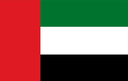
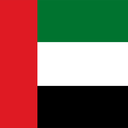
The Flag of the United Arab Emirates features four colors arranged in a distinctive layout.
- A vertical red stripe on the hoist side
- Three horizontal stripes to the right:
- Green on top
- White in the middle
- Black at the bottom
The design is clean and balanced, making the colors instantly recognizable and symbolic.
Meaning of Colors and Symbols
Each color of the Flag of the United Arab Emirates carries strong historical and cultural meaning.
The red color represents strength, courage, and unity. It also reflects the historic color used by many ruling families in the region.
The green color symbolizes growth, prosperity, and hope. It is also closely associated with Islam and renewal.
The white color represents peace, honesty, and neutrality. It reflects humanitarian values and goodwill.
The black color represents strength of mind and dignity. It is often interpreted as the defeat of enemies and the end of injustice.
Together, these four colors are known as the Pan-Arab colors, symbolizing Arab unity and shared heritage.
Historical Background of the UAE Flag
The Flag of the United Arab Emirates was officially adopted on December 2, 1971, the day the UAE was formed as a federation.
The design was created by a young Emirati, Abdullah Mohammed Al Maainah, whose entry was selected from a national competition.
Before federation, each emirate used its own flag. The adoption of a single national flag marked the beginning of unity among Abu Dhabi, Dubai, Sharjah, Ajman, Umm Al Quwain, Fujairah, and later Ras Al Khaimah.
Readers interested in federation and nation-building can explore more context on the History of the United Arab Emirates page.
Cultural and National Significance
The Flag of the United Arab Emirates holds deep emotional and cultural significance for Emirati citizens.
It symbolizes unity among the seven emirates, loyalty to leadership, and pride in national achievements. The flag is widely displayed during National Day, public celebrations, and official ceremonies.
For citizens, the flag represents progress, stability, and respect for tradition within a modern state.
Relationship to Other Arab Flags
The Flag of the United Arab Emirates shares its color scheme with many Arab national flags, such as those of Jordan, Kuwait, and Palestine.
While the colors are shared, the UAE’s layout is unique, particularly the vertical red stripe. Comparing Arab flags highlights how shared heritage is expressed through distinct national designs.
The UAE flag emphasizes unity through simplicity and balance.
Modern Use of the Flag of the United Arab Emirates
Today, the Flag of the United Arab Emirates is flown on government buildings, schools, homes, and public spaces across the country. It is also displayed at embassies, international organizations, and global events representing the UAE abroad.
The flag plays an important role in civic education, helping citizens understand federation, national values, and shared responsibility. Its continued use reinforces the UAE’s identity as a united and forward-looking nation.
Interesting Facts About the Flag of the United Arab Emirates
- It was adopted in 1971.
- It represents the federation of seven emirates.
- The design was chosen through a competition.
- It uses Pan-Arab colors.
- National Flag Day is celebrated annually.
Questions About the Flag of the United Arab Emirates
What do the colors of the UAE flag represent?
Red represents strength, green represents growth, white represents peace, and black represents dignity.
When was the Flag of the United Arab Emirates adopted?
It was adopted on December 2, 1971.
Who designed the UAE flag?
It was designed by Abdullah Mohammed Al Maainah.
Why does the UAE flag use Pan-Arab colors?
They symbolize Arab unity and shared heritage.
Where is the UAE flag commonly displayed?
On public buildings, homes, and during national events.