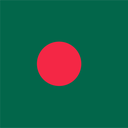
Design of the Flag of Bangladesh
The flag of Bangladesh features a deep green field with a red circle slightly shifted toward the hoist side. The design is intentionally simple, without any text, stars, or additional symbols.
The off-center placement of the red circle ensures visual balance when the flag is flying. The strong contrast between green and red makes the flag easily visible and memorable. This clean layout allows the symbolism to stand out clearly and avoids unnecessary complexity.
Meaning of Colors and Symbols
Each element of the Bangladesh flag has strong symbolic meaning. The green color represents the lush landscape of Bangladesh, its fertile land, and natural beauty. Green also symbolizes youth, vitality, and hope for a peaceful future.
The red circle is the most significant symbol on the flag. It represents the rising sun, symbolizing a new beginning and independence. At the same time, the red color reflects the blood shed by martyrs during the Liberation War of 1971, honoring those who sacrificed their lives for freedom.
Together, green and red express both the natural richness of the country and the emotional cost of independence.
Historical Background of the Bangladesh Flag
The origins of the flag of Bangladesh date back to the Bangladesh Liberation Movement. An early version of the flag was first used in March 1971, during the struggle for independence from Pakistan. That early design included a map of Bangladesh inside the red circle.
After independence, the map was removed to simplify the design and ensure easier reproduction. The current version of the flag was officially adopted on January 17, 1972. Readers interested in the historical context of this period can explore more details on the History of Bangladesh page.
Cultural and National Significance
The flag of Bangladesh holds deep emotional importance for its people. It is a symbol of freedom, sacrifice, and national unity. The flag is prominently displayed during Independence Day, Victory Day, and other national commemorations.
For Bangladeshis, the flag represents shared struggle and collective identity. It is commonly seen in schools, public buildings, cultural programs, and international events, reinforcing a strong sense of national pride and remembrance.
Relationship to Other National Flags
The Bangladesh flag is often compared to the flag of Japan due to its use of a red circle on a plain background. However, the meanings and cultural contexts of the two flags are entirely different.
Unlike many national flags, Bangladesh’s design avoids complex symbolism or colonial elements. Its simplicity makes it unique and deeply meaningful, especially in the context of modern independence movements.
Modern Use of the Flag of Bangladesh
Today, the flag of Bangladesh is flown on government buildings, schools, and public institutions throughout the country. It is also displayed at embassies, international organizations, and global events representing Bangladesh abroad.
The flag plays an important role in education, national ceremonies, and sports events. Its continued use reinforces national memory and strengthens Bangladesh’s identity on the world stage.
Interesting Facts About the Flag of Bangladesh
- The flag was officially adopted in 1972.
- The red circle represents both the rising sun and sacrifice.
- Green symbolizes the country’s fertile land.
- An earlier version included a map of Bangladesh.
- The circle is slightly offset for visual balance.
Frequently Asked Questions
What does the red circle on the Bangladesh flag represent?
It represents the rising sun and the blood of martyrs who died for independence.
Why is the Bangladesh flag green?
Green symbolizes the country’s fertile land, youth, and hope.
When was the flag of Bangladesh adopted?
The current design was adopted on January 17, 1972.
Did the Bangladesh flag always look the same?
No, an earlier version included a map inside the red circle.
Is the Bangladesh flag used internationally?
Yes, it is recognized and used worldwide as the national flag of Bangladesh.